
Ready for a bold statement? The right lighting can make or break your event.
Now let’s get more specific. The right combination of lighting and lighting types is what makes each component of your event shine. From accessible and engaging general sessions to attention-drawing tradeshow booths and elegant galas, there is no one-size-fits-all approach to lighting.
Lighting is responsible for making your stage visible, helping attendees navigate the event space, and ensuring important information is highlighted. But the ways lighting can be used is much more varied than that.
Lighting sets the tone. It elevates your event. It tells attendees where their attention should be. It indicates a shift in mood. It creates an experience.
Keep reading to learn what types of lighting you may need for your next event.
Stage Lighting
When we talk about stage lighting, the three typical functions we’re looking for are stage wash, spotlights, and beams. A stage wash supplies even, bright lighting across the stage so that everything is lit. Meanwhile, a spotlight gives a much more narrow field that is designed to highlight a single performer or presenter. A beam creates an almost laser-like column of light that is primarily used for dramatic effects.
Many events, especially large ones, will use all three types of lighting at one point or another, and understanding what kind of lighting you need is important in determining what kind of lighting instruments will best fit your needs.
1. LED Batten / Wall Washer
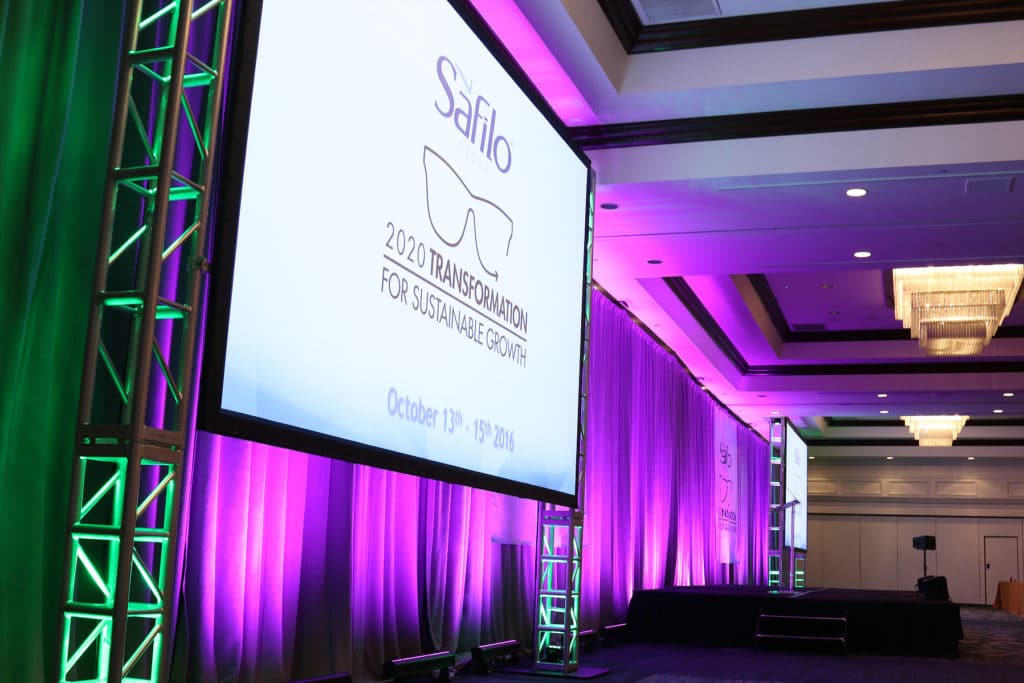
The role of this simple uplight is to give your stage a uniform wash of light.
Picture a typical event stage with curtains or screens for event displays across the back wall. Typically, the back of the stage is evenly lit. It isn’t necessarily intended to look fantasy or artistic. Instead, it serves a functional purpose: evenly lighting the back wall of your stage making it easy for presenters to walk along it and easy for attendees to see every part of the stage.
While LED Batten and Wall Washers were originally used to light the Cyclorama in theatrical performances, these lights provided much needed lighting in any type of live event.
2. Ellipsoidal Lights or Lekos
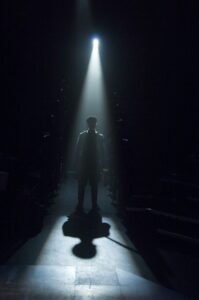
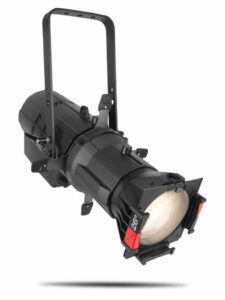
Ellipsoidal lights, or for those in the events industry, Lekos, are another staple in theatres, arenas, entertainment venues, and anywhere else that live events regularly take place.
Why? They’re the utility knife of the lighting world.
The long, skinny lights with a small barrel on the front end can be used for virtually any kind of lighting needed. From creating an event stagewash to clear, crisp spotlights, to mood lighting in different colors, Lekos often feel like a one-stop-shop.
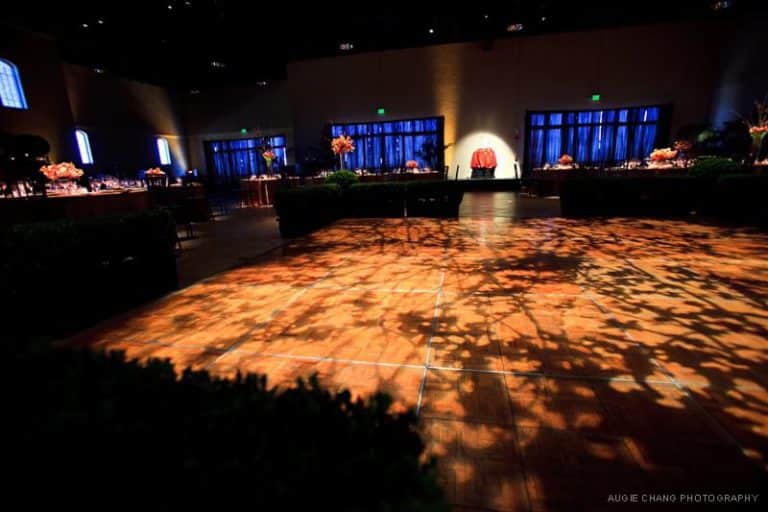
They can even be used with gobos. A gobo, short for “goes between optics,” is a stenciled disk made out of metal, plastic, or glass (depending on the type of bulb it will be used with) that, when placed in a Leko or other light source, create a sharp projected pattern onto a backdrop, wall, floor, or ceiling. For corporate or association events, we regularly see organizations use them to project their company logo or an event theme. In experiential events, they may take on the texture of a specific type of location (like trees for a forest) or to create texture on whatever surface it’s being used against.
The highly adjustable lights create smooth transitions from soft to extremely focused light.
3. PAR Lights
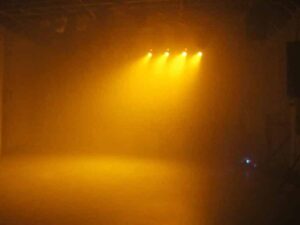
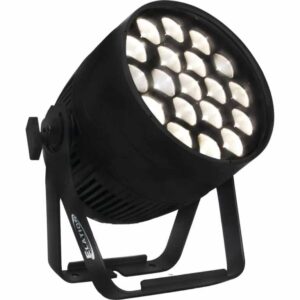
If you’re only good at doing one thing, you better be good at it. It’s a sentiment the mighty PAR Light (also known as a PAR Can) takes very seriously.
So what is a PAR Light the master of? Outputting a whole. Lot. Of. Light.
Originally made with silver aluminum and a PAR headlight, PAR lights are now built more compact (but are just as durable) and utilize LEDs, giving us the ability to create brighter lights with a seemingly unlimited number of color mixing options.
If you’re at an event, especially one with a large stage, odds are LED PAR lights are helping to provide that bright, even stage wash you need.
4. Fresnels
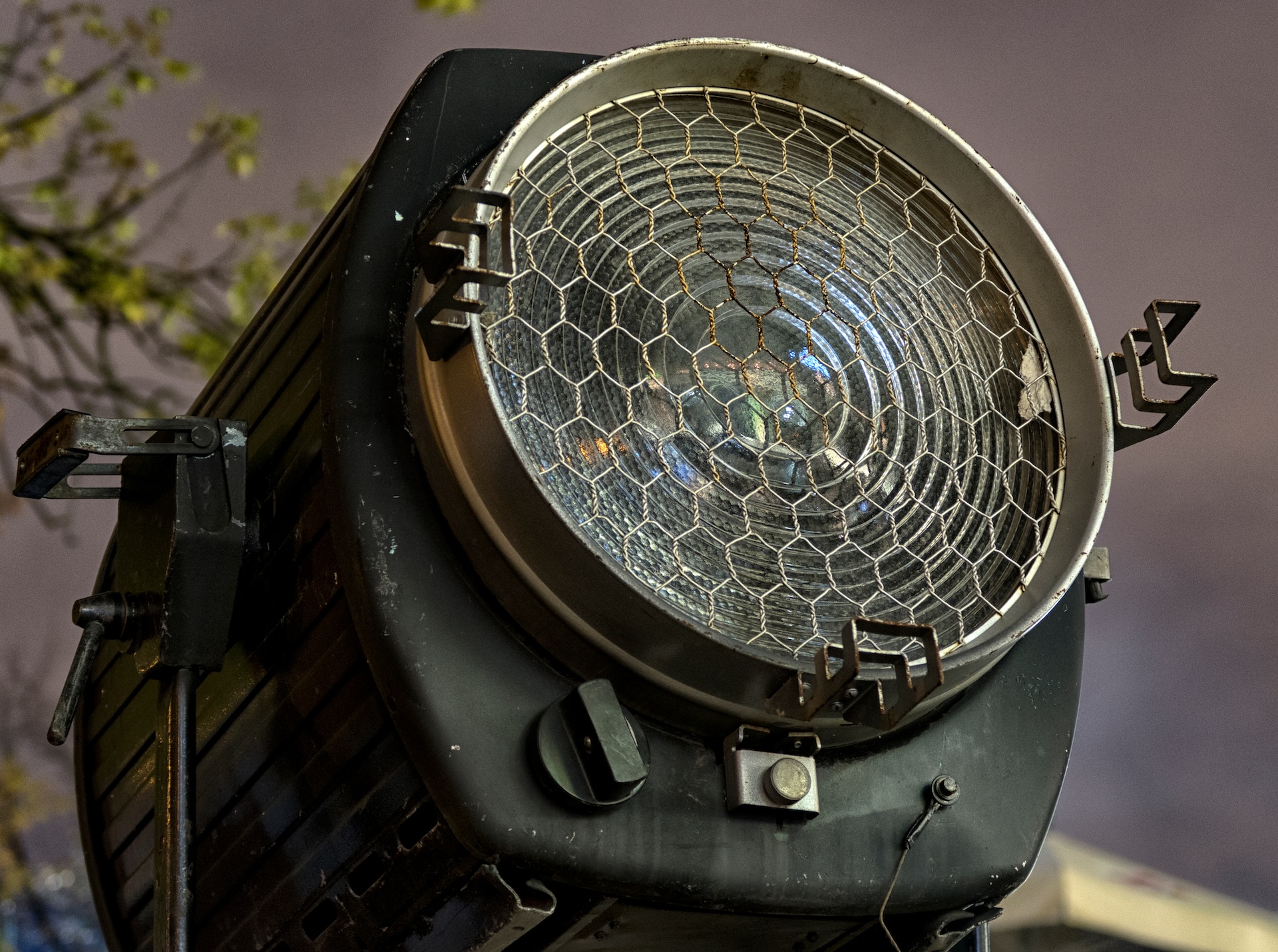
With a lens made up of several concentric rings, fresnels feature lighting that is brightest and sharpest at the center and softens closer to the edges. Anything in the center of the beam will get the brightest light, while everything around it will be slightly less focused.
Fresnels are effective for stage washes as well as narrow beams of light, but unlike PAR lights or Lekos, they can’t be used with shutters, gobos, or any other light blocking patterns, making them far less flexible – and much less commonly used.
5. Moving “Intelligent” Lights
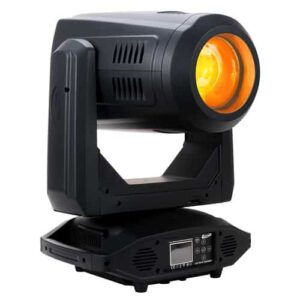
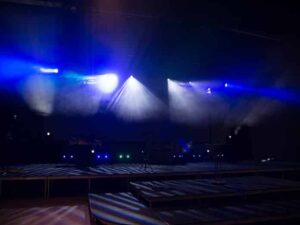
If event lighting were in school, moving “intelligent” lights would be the prom queen. It’s easily the most popular light on the list.
Moving lights, often called intelligent or moving head lights, are flexible and versatile, making them easy to use for a variety of purposes and deployments. That, combined with internal gobo wheels to project patterns, colors, prisms, and more, makes the light easy to use in many ways, even within the same event.
Moving lights are unique in their ability to be used as a spotlight, to create a wash, or as a beam.
As a moving spotlight, intelligent lights can be paired with gobos to project patterns that can rotate and move around the stage or different areas of the room. When paired with gel colors or even in room fog, the lighting can take on a variety of effects that wow attendees.
For a stage wash, the moving lights can make the wash wider or smaller, while still keeping the signature look of a stage wash. Finally, a thin beam of light, like a laser, can create dynamic lines that move around the space.
6. Follow Spot
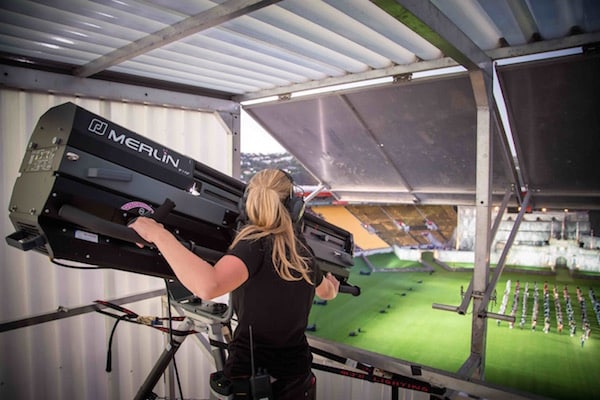
This very bright, very concentrated light has the ability to be incredibly specific in what it is lighting – which is typically a performer or keynote presenter.
We see this most often used in arenas or dramatic moments in theatrical performances, but it does have its uses in live events.
The drawback? It is manually operated by a follow-spot operator, unlike the moving intelligent lights, which are remotely controlled.
Atmospheric Lighting.
You’ve got your stage lighting down. You have the right tools to light the back wall, have a great even stage wash, and are ready to spotlight presenters when needed. The lighting for your event is all squared away, right?
Wrong.
Lighting isn’t just about making the stage look good – it helps you transform your entire space and build atmosphere. Here’s how:
7. LED Uplights
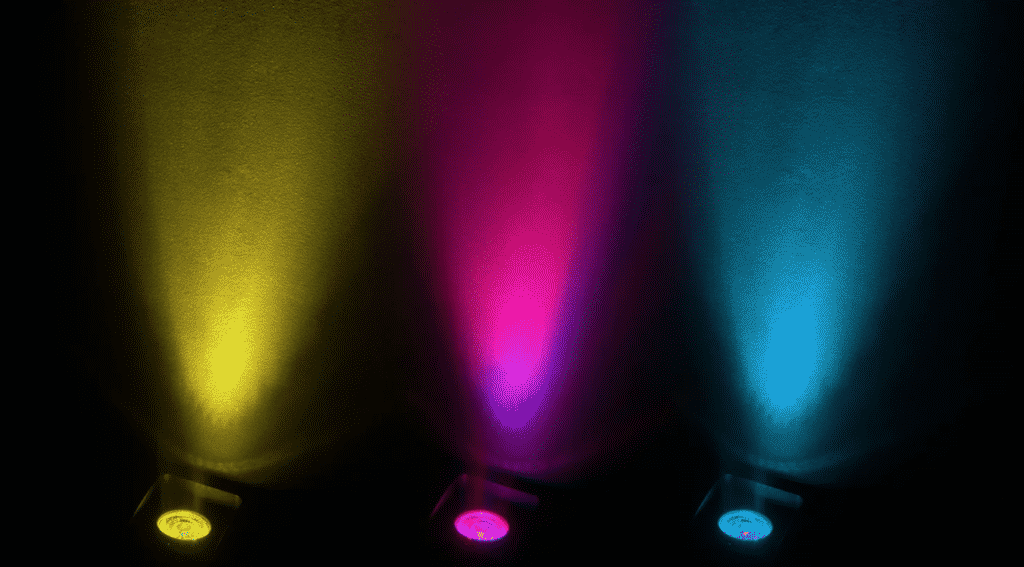
You could leave the walls of your event space blank, making the largest surface in the room look, well, bland. OR you could add some pizazz.
LED uplighting have become a staple rental option in the event lighting industry, and you’re used to seeing them everywhere for a reason: the instant impact they have on any room or venue.
LED uplights allow you to create columns of light in various colors, build illusions that change the space, and make the entire room look cohesive with the stage and event visuals. From including brand colors for an instant impact to changing the lighting (and, along with it, the vibe) in the room to mark different sessions and speakers, this simple, easy addition to a room builds atmosphere in a big way.
8. LED String Lights
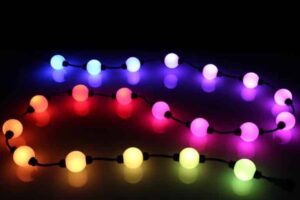
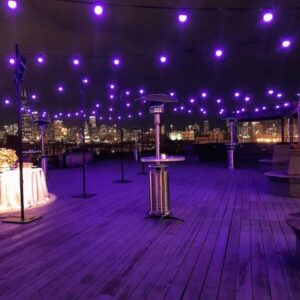
Do you remember when rustic weddings were all the rage? The string lights that hung from the rafters of a repurposed barn were just as much of a staple as the mason jars holding baby’s breath flowers and burlap tablecloths.
Picture those same string lights, only now they’re able to change colors. Not just as a group, but with each light being individually controlled through pixel mapping. Suddenly, you can create curtains of light, Maypole style activations, lit centerpieces that can change color in time with the music or to reflect the vibe of a certain event segment… the list goes on and on. Basically, anything that could’ve been done with string lights still can be done – only now they’re programmable, customizable, and incredibly cool.
9. Pin-Spot Lighting
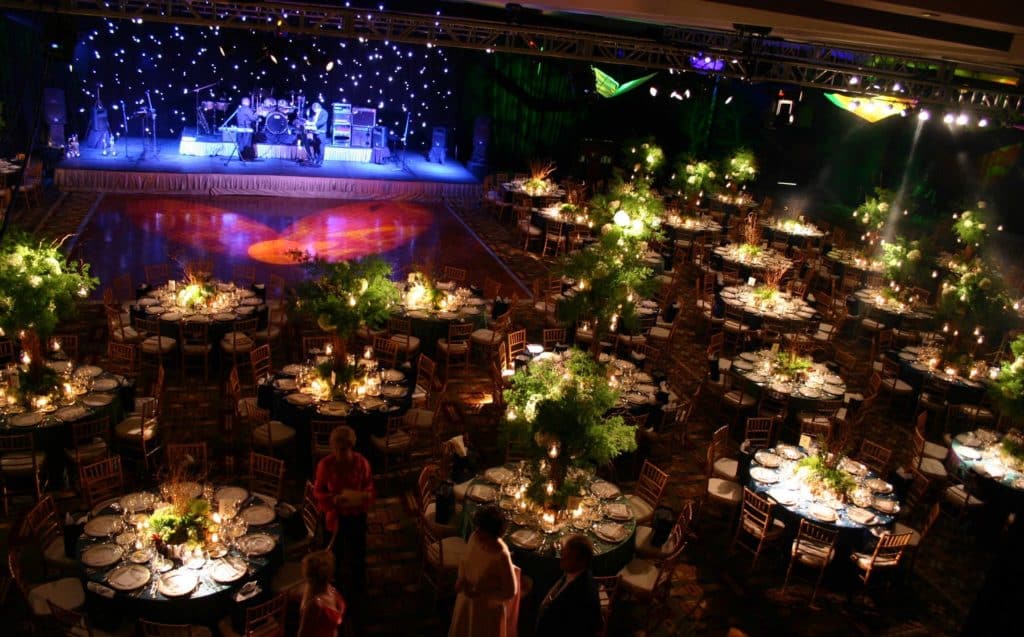
Exuding elegance, pin-spot lighting has become a popular staple at weddings and galas. These incredibly narrow beams of light are focused on specific elements or areas of the room, drawing attention to specific spaces at specific times.
The lights, usually hung from overhead, may highlight centerpieces, place cards, a guest book, the bar area, a cake table, a dessert table, fundraising ticker, donation areas, and more! Not only do they look great, they can be used to highlight areas of the event space as needed, helping attendees not only feel the elegance of the evening, but navigate the space.
10. Centerpiece Lighting
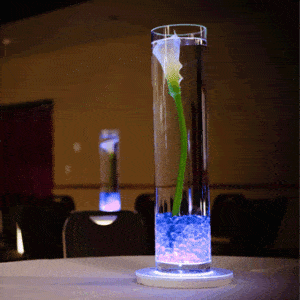
This isn’t what you’d typically think of as event lighting simply because it’s incredibly low-tech. But something doesn’t have to feel like it’s out of an episode of Star Trek to have an impact on your event atmosphere.
These battery-powered disc lights can be laced between items like centerpieces, flowers, buffet displays, photo areas, and more. They add to the ambiance, draw focus, and makes and impression – all while being cost effective and incredibly easy to implement.
11. High-Lit Tables
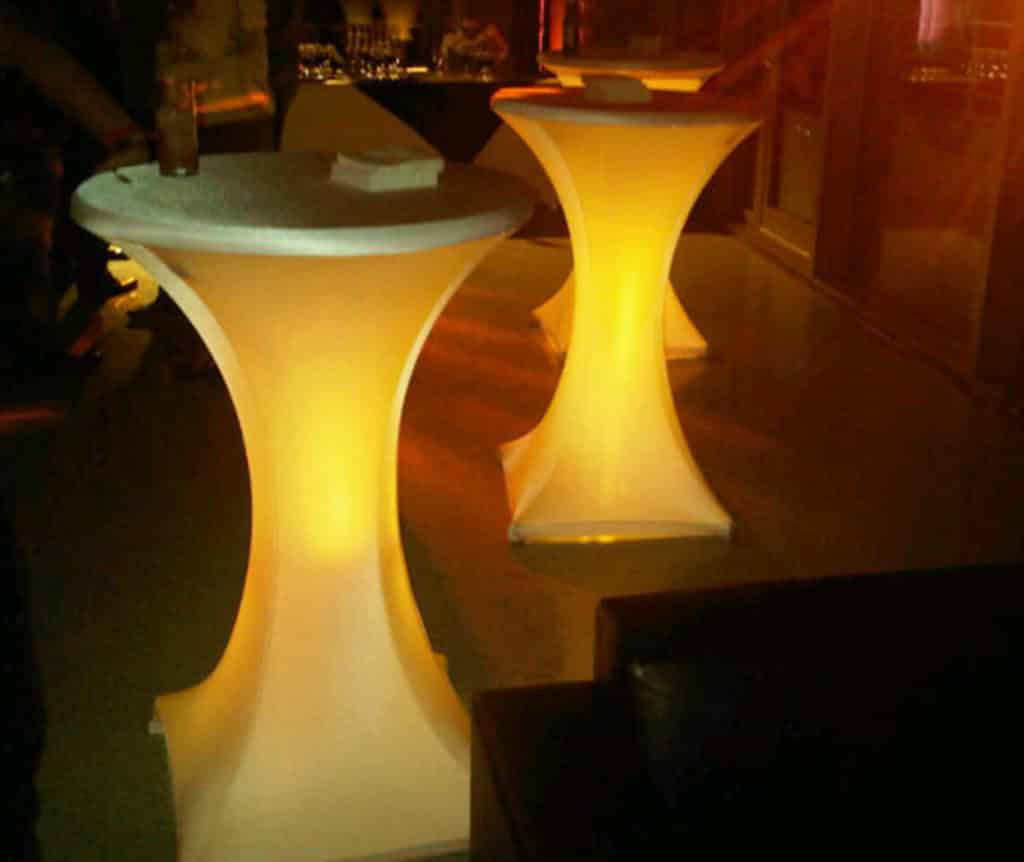
The only two ingredients you need to bring the magic of events to your tables are stretchy fabric and uplighting.
High tables that are beautifully lit are another way to add to the mood and ambiance of galas, elegant networking events, weddings, and more! It makes the tables look more appealing, helps the event look more cohesive, and gives an upscale feel that brings an event from “nice” to “wow”.
This lighting, of course, has been around for a while, but with the right lighting designer or programmer, you can really utilize the uplighting to match your environment. The lighting can even be synced to the other lights or music at different points during the evening.
12. Illuminated Bar
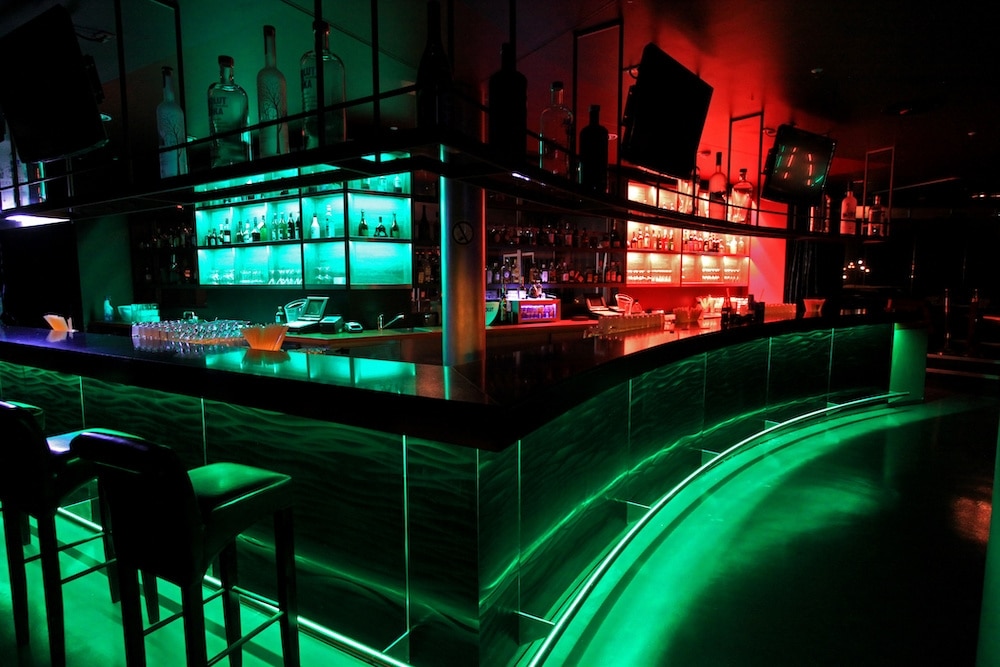
Anyone who’s been to an evening networking event will tell you the bar is the place to be. It’s also often the first stop for attendees at a gala or who have just finished up a long day or sessions.
If a lot of eyes (and elbows) will be on the bar, why not make it look good? Give the bar some extra love with LED glass. When bottles are placed on the glass, they’ll glow, glasses will shine, and the illuminated display will give attendees something to look at, and talk about, as they gather.
13. Illuminated Drinks
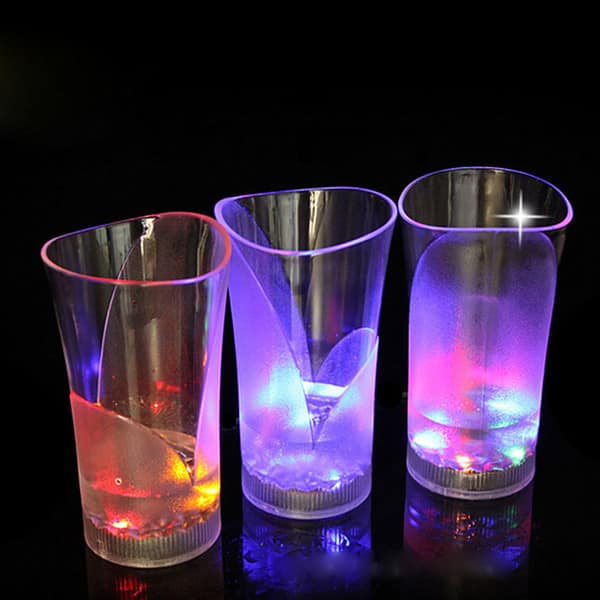
We know what you’re thinking – but contrary to popular belief, light up ice cubes and cups are not reserved for bars and clubs, and illuminated drinks don’t have to look like a frat party.
How? By utilizing nice drinkware and making sure the colors of the ice cubes and cups match the atmosphere and mood of the rest of the space.
Architectural Lighting.
Architectural lighting should focus on three factors:
- Aesthetic appeal (what to light up and what to keep in the dark)
- Ergonomics (the relationship between light sources and individuals)
- Energy efficiency
Start by figuring out what you should light and what you should keep dark. This is just as much about functionality as it is aesthetic appeal. What do attendees need to see (aside from the stage) during the event? This could mean making sure exits (and clear pathways to them) are well lit, but it may also mean making sure that specific areas you want to draw attention to are easy to find. At the same time, choosing not to light something that isn’t as aesthetically pleasing or is an area you don’t want attendees in (like backstage or the front of house table) helps keep focus exactly where you want it.
In addition to functional lighting, bold swathes of lights onto a tree canopy, a bold pattern in a pool, crisp visuals on walls, and more helps to set the scene and make an instant impression.
Experience.
Lighting can also be used to create a fun, often interactive experience.
14. Wristband and Lanyard Lighting
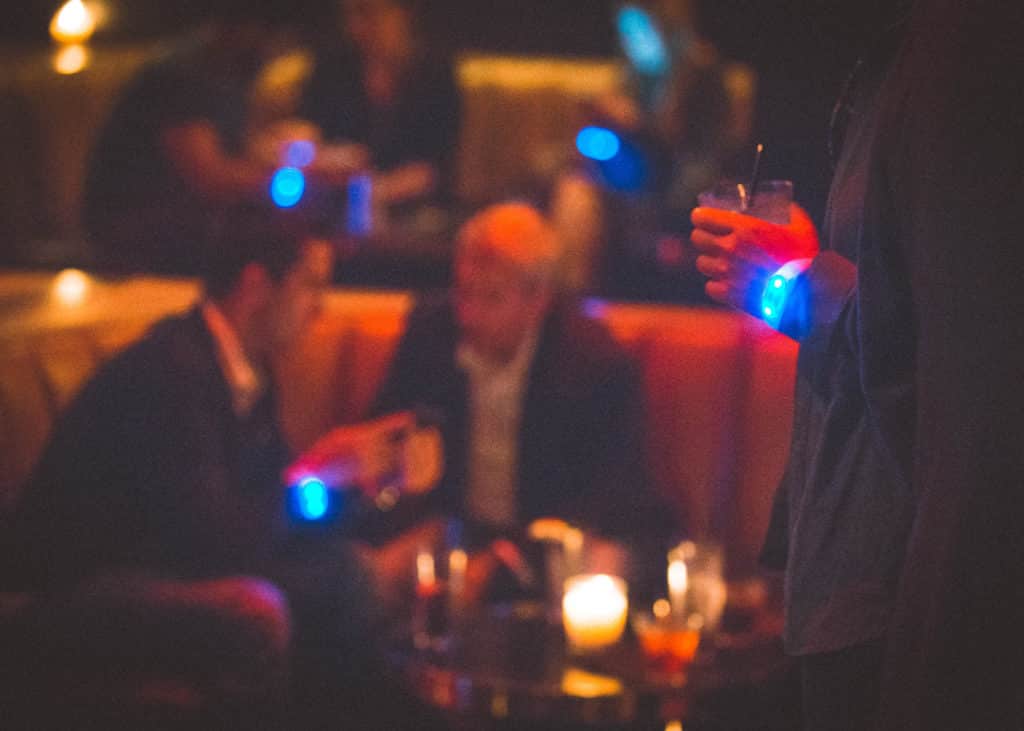
These are often thought of for concerts or the Superbowl halftime show, but they can also be used at your next meeting or event.
The tech is surprisingly simple. Every attendee is given a wristband or lanyard. During the event, the operator triggers the wristbands or lanyards to illuminate and are even able to isolate specific areas to turn different colors with the use of pixel mapping.
Outside of their lighting capabilities, many wristbands also come equipped with tools that help to track audience engagement, make it easier to network, and provide valuable post-event data. Important metrics, such as which sessions were most heavily attended, whether attendees stayed at sessions for the duration, and more can be tracked and used to help design the event schedule and offered sessions in future years. Some wristbands can even use technology that allow attendees to tap their wristbands together and instantly exchange contact information, making it easier to network.
15. Balloon Lights
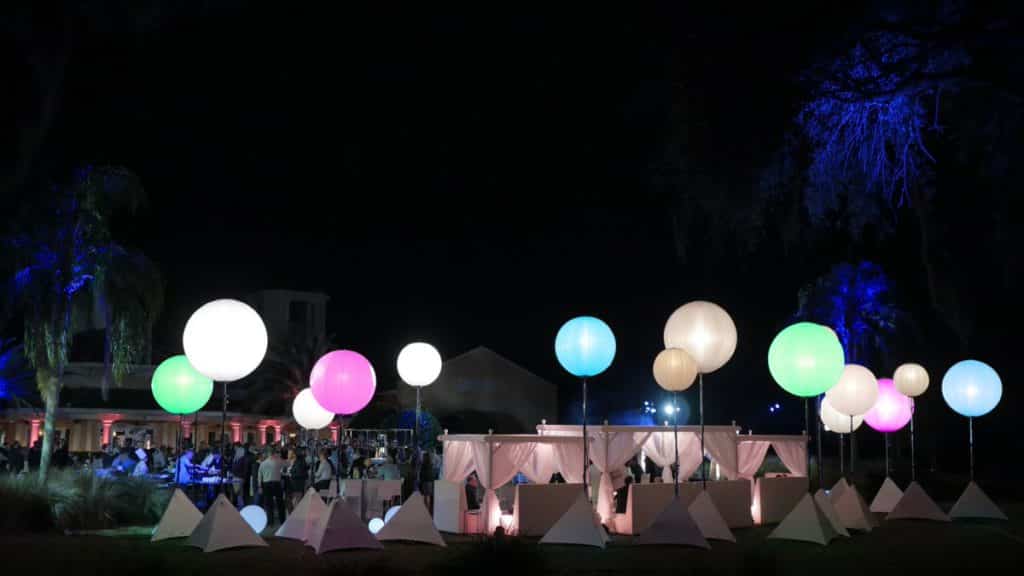
Air-inflated fixtures can be used indoors or in outdoor environments and can be ground supported or suspended, or left loose so that audiences are able to interact with them.
Warm halogen lighting can be used for elegant affairs, or for bolder, more colorful events, LED lighting can be deployed, allowing a lighting operator to change the colors of the balloons. They can even be customized, quickly and inexpensively, with logos or event themes.
16. LED Pixel Tube Lights
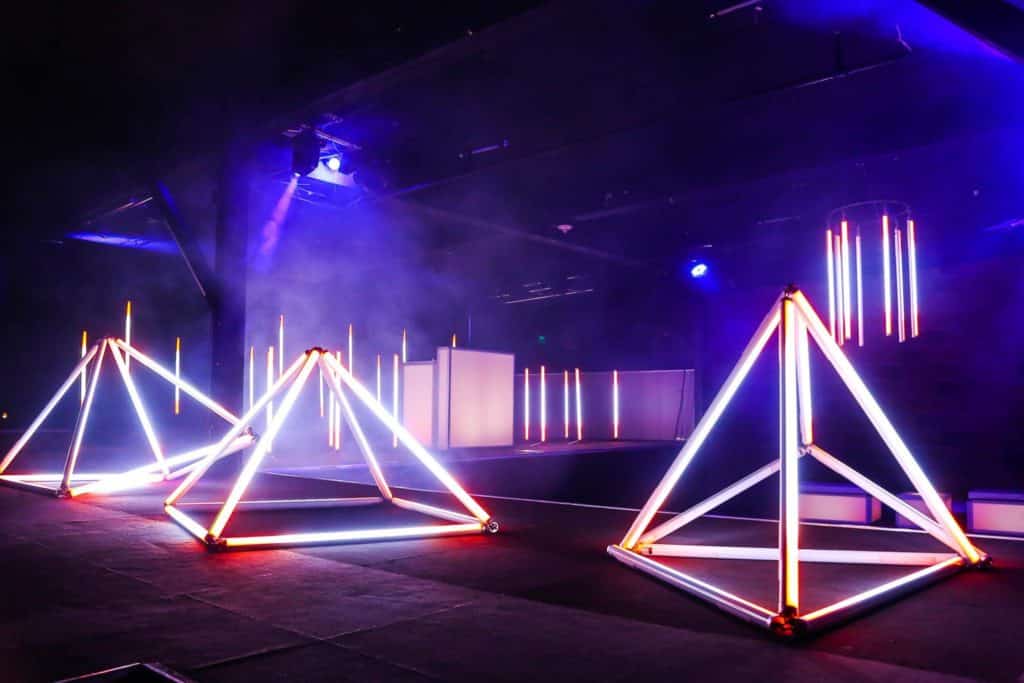
Their ease of use and implementation combined with a unique look have helped LED pixel tube lights gain popularity in live events. Because they are lightweight and wireless, the lights can be mounted just about anywhere. From adding a creative element to the stage for awards ceremonies, presentations, and keynotes to building creative 3D shapes and sculptures during experiential events and installations, the LED pixel tube lights are perfect for trade show booths and exhibits, as well as association and corporate meetings.
Even better? The lights are waterproof, allowing them to be used in outdoor events.
17. Kinetic Lights
While these can’t effectively light your performers or your stage, they can create an incredibly unique and fun experience that brings the event to life.
Kinetic lights combine several LED orbs or LED pixel tubes that are attached to chain motors to maintain movement over a certain space or object. At concerts, this may mean that a moving LED light show takes place behind or directly overhead the band. At pop-ups, this creates a dynamic focal point that will draw attention. At conferences, kinetic lights create a wow-worthy moment, upleveling the experience.
Some great examples of them in use are the Adidas Kinetic Lights Fashion Show activation, the Red Hot Chili Peppers Getaway tour, and the Deep web Kinetic Laser Installation.
18. Laser Lights
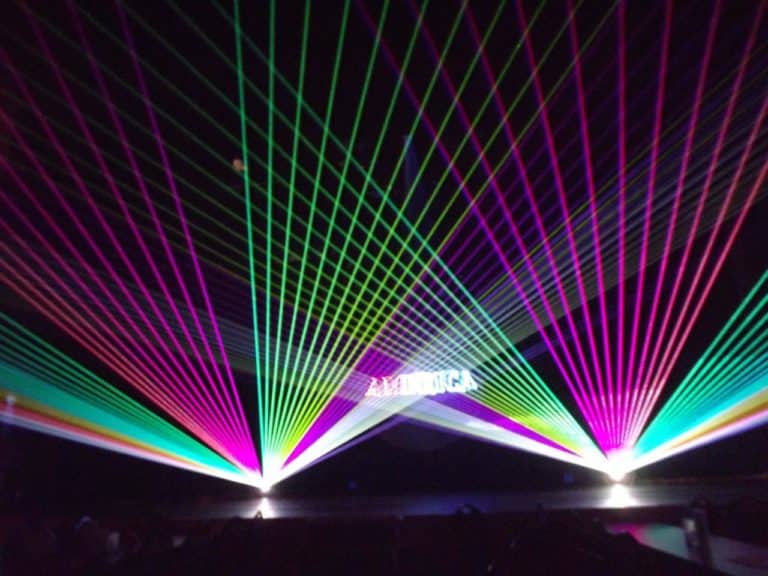
If you regularly attend concerts and are no stranger to music venues and converts, you’ve probably experienced a laser light show before.
Producing hundreds of patterns, these lights can flash and rotate on walls, ceilings, floors, and more. The lasers come in a variety of colors and can be programmed via lighting consoles and software to change to the beat of the music, bounce around the room, and project images or letters on the walls.
The whole system is pretty straightforward – but because the focused lasers can be harmful to eyes, a licensed safety officer has to be in the venue anytime they are in use.
19. Projection Mapping / 3D Lighting
We know exactly what you’re thinking.
I’ve already heard about projection mapping. And is that really event lighting? I thought it was a way to display event visuals.
Both are true.
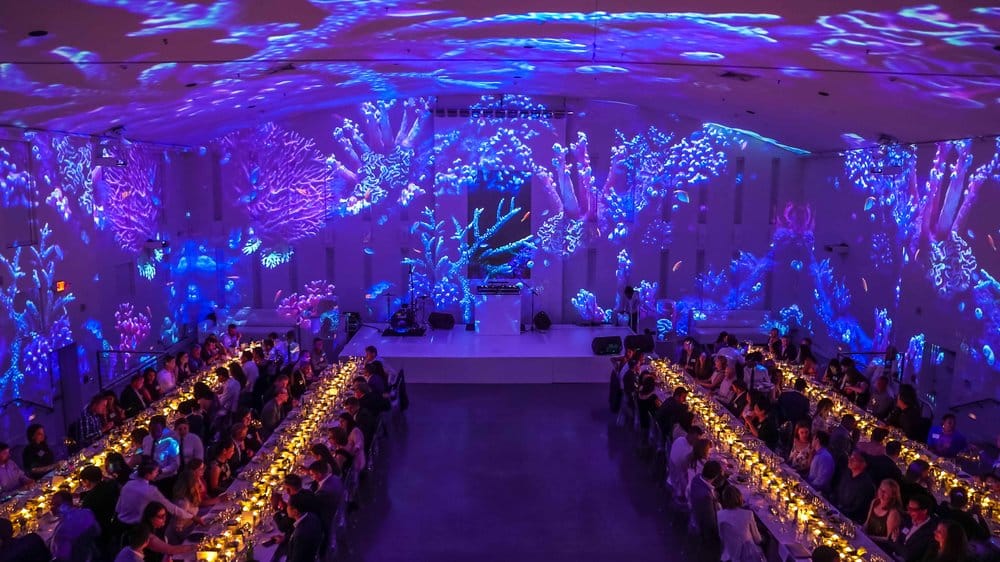
While projectors are traditionally used to project images or videos onto a screen, when projection mapping, they’re really being used as a lighting instrument.
Why? Because it’s the projection of light that allows projectors to turn any surface into an engaging display for imagery, videos, graphics, and more. From buildings to stage props, projection mapping gives lighting the lower to add texture to boring walls, transform a ballroom into an aquarium, or even build an art installation that spans several buildings.
On a much smaller scale, you can projection map your tables, centerpieces, floor… if it is a surface, it can be mapped, and it will wow your attendees.
Eye Candy Lighting.
Eye candy lighting refers to lighting on stage that is purely there for decorative purposes. In many ways, eye candy lighting is less a certain type or types of lights, and has more to do with the way lighting is used to make a variety of effects onstage.
20. Blinders
Blinders are most often associated with use at a concert. Hung high in the ceiling and pointed down at the audience, these lights are able to produce incredible brightness.
However, their brightness is adjustable and the lights come in a wide variety of colors and shapes, making them a great type of lighting to use as eye candy lighting.
A wall of blinders can be used and run at 5% brightness to give warmth to the stage, or blinders in unique shapes can be set in a variety of locations and colors to make the appearance of the stage dynamic, interesting, and eye-catching.
21. Par Washes
Lights used to create par washes are often used as eye candy. When pointed at the audience blinder-style, the lights can be programmed in a way that makes them look like a twinkling wall, have intense color fades, and feature colors changing in different patterns.
22. Practicals
An idea that comes from the theatrical world, but is gaining popularity in live events and meetings.
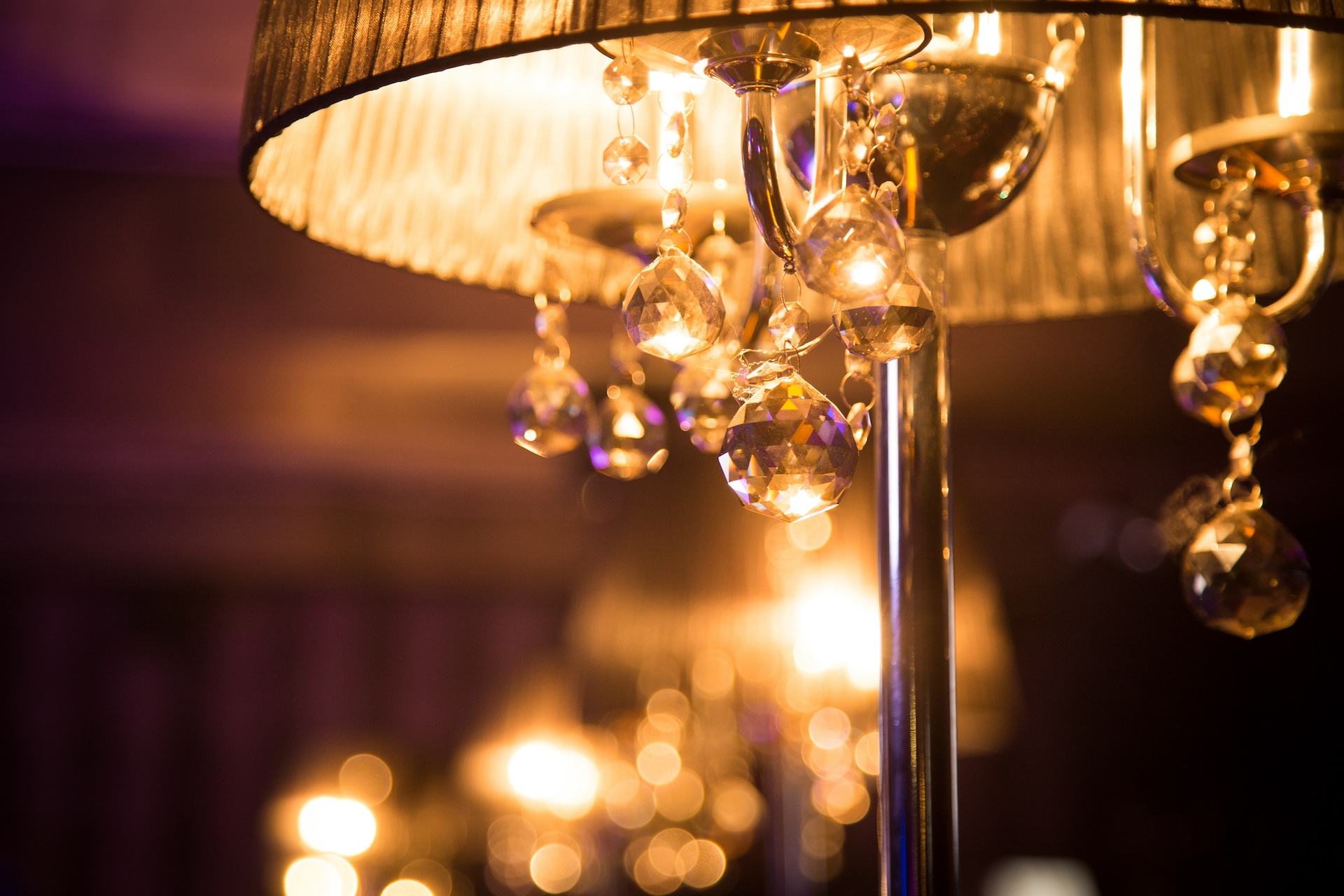
These lights that are used for practical purposes in the real world (homes, restaurants, third-spaces, etc.) can be used during live events to create homey, comfortable spaces both onstage and in other spaces around the venue.
Things like chandeliers, lamps, sconces, twinkle lights, and battery operate candles, create a very specific look and feel and while, onstage, their purpose is primarily atmospheric, in other areas of the event, they help to create unique, varied spaces. Networking rooms, respite areas, lounges, and more can have a tone instantly set with practical lighting fixtures.
We get it – you want your event to make a splash. Lighting is often a key component in upleveling the event, creating a cohesive atmosphere, and giving your attendees an unforgettable experience. The key to using lighting in the right ways comes down to your specific audience, tone, needs, and overall vibe.
If you’re looking for lighting design that is specific to your event, our team is here to help! Reach out today to learn which of these solutions will help you achieve your event goals.