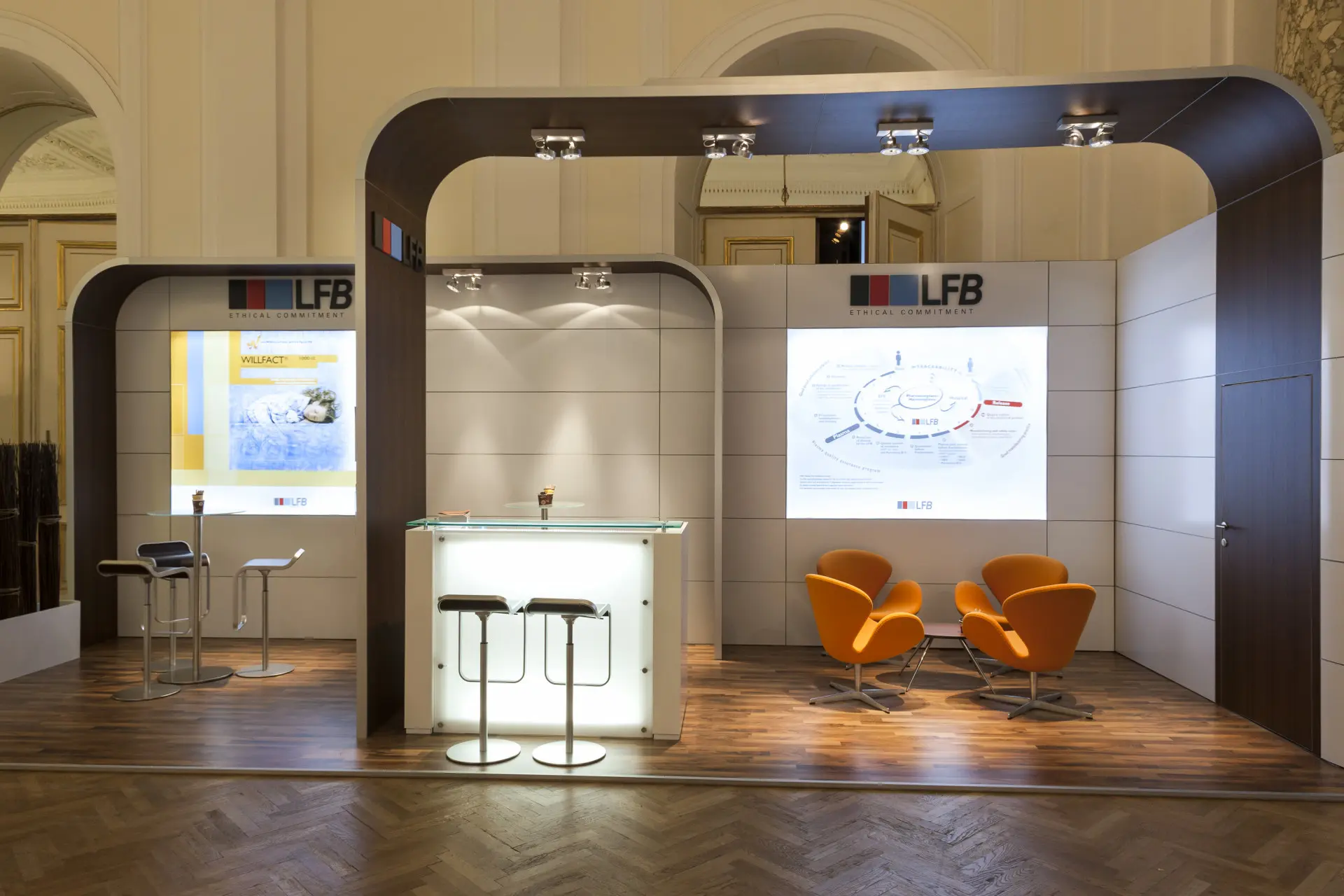

Do you remember the days when trade show booths consisted of a few walls or a desk, some product displays, a swag table, and a guy in a polo with a clipboard?
Us too. And nothing against the guy with the clipboard, but we’re glad the trade show experience has gone up one (or 20) notches over the past several years.
Between unique displays, bright lighting, and interactive elements, it takes more to stand out in an exhibit hall and attendees expect more from their trade show experience. Luckily there are some incredible, unique, and exciting ways to incorporate AV into your trade show booth to create a wow-worthy stop for attendees.
Take Advantage of LED.
Let’s be real: large-format video content is just plain cool, especially when you compare it to static graphics or printed displays. Screens with bold, eye-catching colors and content that rotates regularly are much more likely to capture the attention of people walking by and inspire them to stop. Not to mention, it allows you to share more messaging, product information, and give attendees a sneak peak of why they should come to your booth.
Of course, LEDs aren’t the only types of video surfaces. While the age old debate of LED vs. Projection usually relies very heavily on the specific details for the event, we’re ready to make a bold claim: when it comes to trade shows, LED reigns supreme.
The first reason is purely practical. Because projectors, quite literally, project light, they tend to look best in dark spaces where the production team has control over the lighting. Neither of these things are true of exhibit halls during trade shows. Your AV team won’t have control over the lighting of nearby booths, the brightness of other displays, and (most importantly) the overhead lights in the room.
LED, unlike projection, doesn’t rely on a dark space to shine, and the impact level of your visuals won’t be negatively affected by anything else in the room.
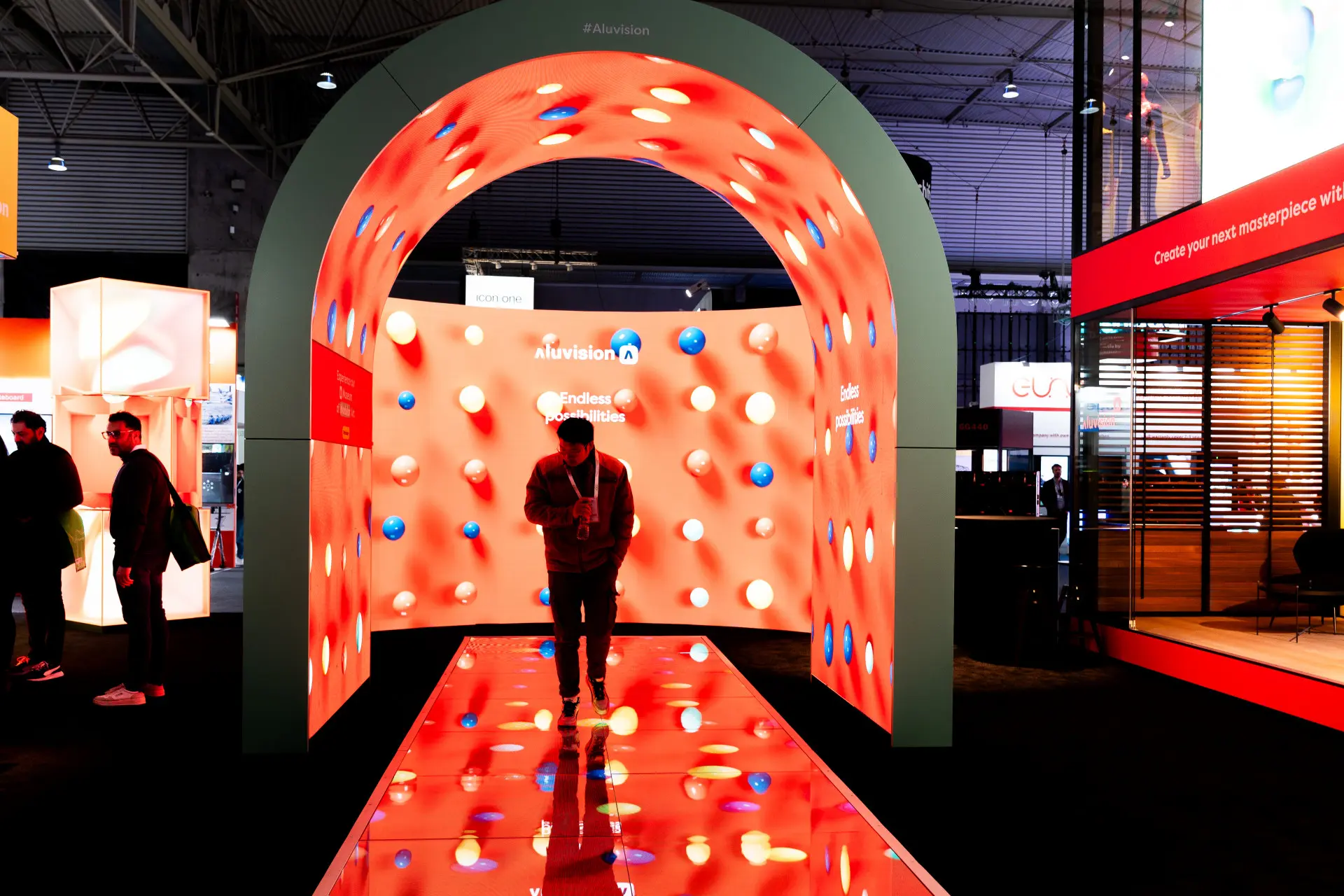
LED also gives you more flexibility for the size, shape, and use of your screens. Do you want a rounded ball hanging over your booth that has rotating graphics? You can do that with LED. Do you want your visuals to wrap around a desk or the corners of your booth? LED can do that, too. Do you want information on your ceiling, a tunnel for attendees to walk through to enter your experience, or touch screen capable displays? LED can do all of that, and so much more.
In short, LED is the brightest, clearest, most flexible, and most impactful way to display your trade show content.
*Pro tip: make sure your content rotates regularly between messaging, product demonstrations, eye catching video content, and any other visuals you have built for the event. Having a variety of content keeps your display visually interesting and will continue to draw the eyes of attendees each time it changes.
Make the Most of Your Audio.
Trade show booths tend to have noise level restrictions, and with good reason. With so many different booths in close proximity, exhibit halls get loud fast, even if the only noise in the room is people talking to each other. When you start bringing in microphones, speakers, and amplifiers, each group will start fighting to be heard, leading to space that is way too loud to hear anything clearly.
And to be fair, microphones typically aren’t needed. You’re rarely, if ever, going to be presenting to large groups of people. At trade show booths, smaller, more personal interactions are much more common, so a big booming sound that reaches into all corners of the room just isn’t necessary.
That doesn’t mean, however, that audio doesn’t come into play at all. Just that your focus shouldn’t center around being loud, but instead, using audio in the right way.
Consider using directional speakers to create a controlled, impactful audio experience so that audio can be directed to specific areas of your booth without bleeding into the booths of your neighbors. You can also use “silent disco” style headphones that allow attendees to put on a headset that will drown out the noise around them and allow them to listen to your talk track at their own speed.
Lighting That Helps You Get Noticed (and Shine).
What makes it possible to see your entire set clearly, boosts visibility, draws attention to your booth, and can uplevel the experience you’re creating? Lighting, of course!
When developing your lighting design, it’s important to figure out what your goals are, both in terms of functionality and the aesthetic vibe.
If physical products are in display, and uplights or spotlights are a must to draw attention to them. Meanwhile, artistic lighting draws focus to your booth and any specific branding that you want to stand out. Backlights will help enhance your displays, and uplights can be used to give an artistic flair to filler or ancillary display items.
That being said, there is such a thing as too much lighting, especially in a relatively small space. While booths that don’t utilize enough lighting won’t capture attention and will look dark and unprofessional, booths that are too heavily lit can be overwhelming, chaotic, and distracting. Attendees aren’t sure where to look, or what to focus on. Think of it this way: when everything is given emphasis, nothing really shines.
An AV team with experience working in exhibit halls can help you strike the right balance to make sure your booth pops without looking messy or like it lacks cohesion. They’ll also be able to help you navigate the venue or union rules, both in regards to the installation of lights, but also if there are any restrictions around your overall design.
Interactive Elements.
One of the big tricks to getting people to stop (and stay a while) at your trade show booth is giving them something to do. And while many people’s minds jump to trivia, quizzes, or carnival style games, we’re here to tell you there’s a better (and cooler) way.
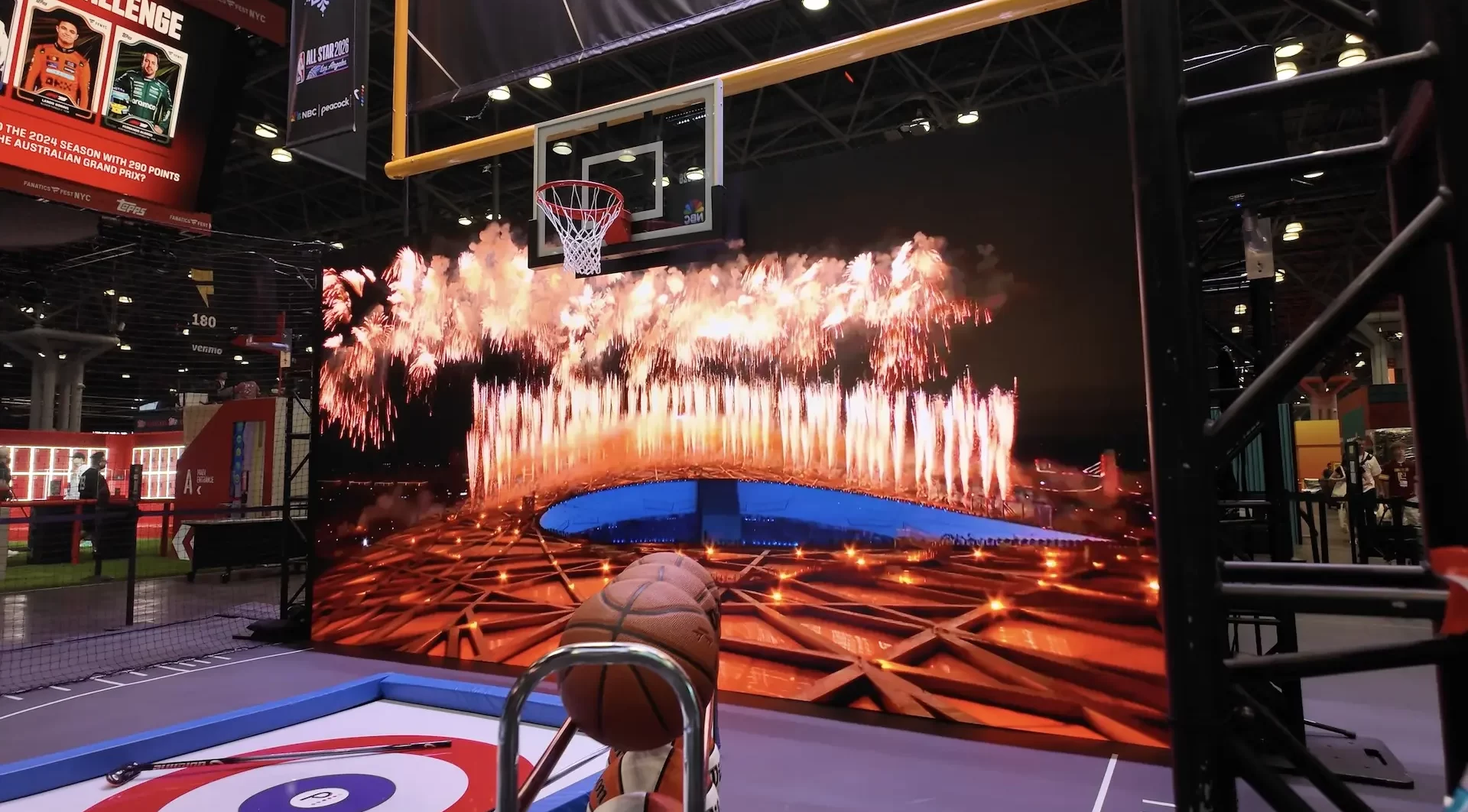
Interactive LED touch screens, like the ones we used for Fanatics Fest 2025, allow attendees to compete in a variety of games, explore products, and even interact with your brand in an unexpected way. Home brands could utilize a giant floor print and allow visitors to walk through a home, discovering each product touch point. A highly customizable product could be updated and displayed in real time. Regardless of how it is used, interactive LED surfaces allow attendees to become active participants in the experience, rather than passive ones.
Other technology, like augmented reality or virtual reality offer unique opportunities for attendees through gamification, virtual product or service tours, and unique visualization.
Trust the Professionals.
With all the ways event technology has evolved, incorporating AV into your booth is about more than flash. It’s about creating an experience that will draw people to your booth, help them connect with the brand, and think about it days after the fact.
That’s why partnering with an experienced AV professional is so important. An AV partner will help you develop an eye catching design that optimizes your content, follows venue guidelines, and is targeted to help you reach your goals.