
Picture this:
A stage with a large 16×9 projector screen behind it, showcasing the presenter’s PowerPoint presentation and video content.
Alternatively, picture a stage with a branded backdrop or heavy drapes and two 16×9 screens on either side of the stage as the primary displays.
It’s nothing revolutionary or terribly exciting, but 20 years ago it was the standard event set up. It wasn’t that these two options were seen as the most effective ways to display content at corporate events, association meetings, or trade shows. It was that these were the default ways events were set up, and the few folks who thought outside the box paid a huge premium for their creativity.
Then came the introduction of (and subsequent large push towards) LED, which was followed by screens in unique aspect ratios, enhanced resolutions, better color quality, and a demand for creative set ups.
The technology rapidly advanced, but for those who pay attention, it may seem that the upgrades have started to slow down.
Keep reading to learn more about how screen technology has changed in recent years and why innovation today is marked by utilization more than technology.
Recent Improvements Aren’t Major Leaps
The utilization of LED? A major leap.
The introduction of projection mapping? A game changer.
The ability to utilize screens in a variety of aspect ratios and, in the case of LED, shapes? A massive shift in live event trends.
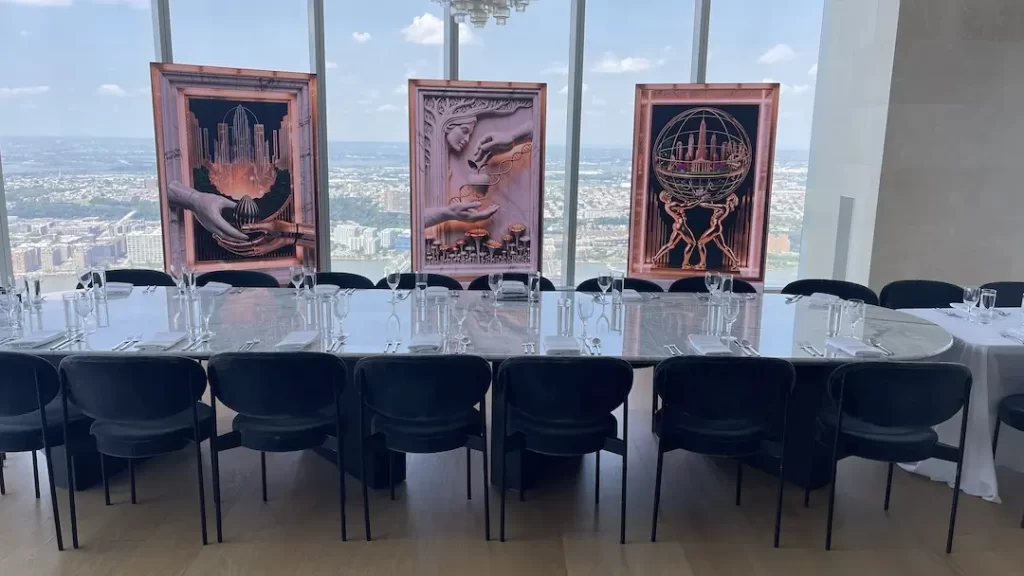
The past several years have still seen improvements to screen and visual technology, but the recent changes aren’t so much major leaps, as they are continuing to build on the foundation that’s already there.
The jump from the standard resolution of 1920×1080 20 years ago to the minimum resolution we see today of 4k gave a vast improvement, with crisp, sharp visuals regardless of the size of the screen. Now, less than 10 years after 4k became the gold standard, 8k is becoming increasingly common. In some rare, specialty cases for screens, especially large, scenic arenas, 16k may even be used.
The introduction of High Dynamic Range technology has created visuals with deeper blacks, more depth, and higher contrast. Meanwhile, year over year, we’re seeing a higher level of color control for each individual pixel in an LED wall giving a wider range of colors and the ability to create (or recreate) virtually any palette in any lighting or location.
Yes, resolutions keep getting higher, contrast becomes sharper, and vibrancy continues to expand resulting in bolder, brighter, and more wow-worthy visuals. And while these updates certainly grab the attention of attendees, they feel less like a major leap in technology and more like the natural next steps to improve on the existing technology.
The Introduction of Curved LED
One of the largest technological advancements is that LED can bend in ways that people never would have imagined 10 years ago.
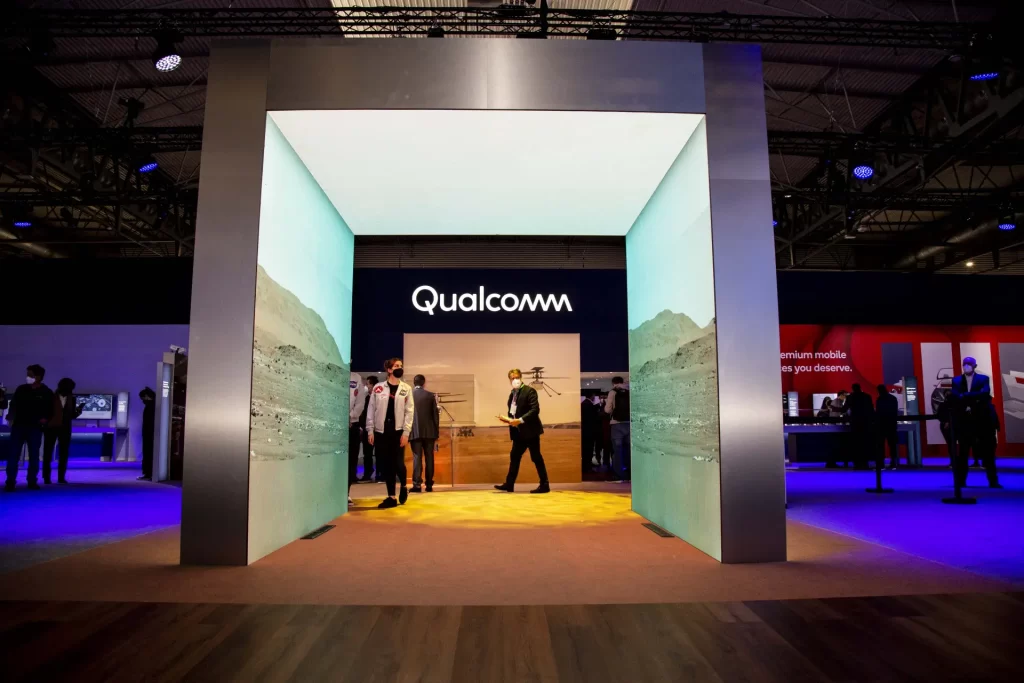
This means that we aren’t just using LED panels to make displays in a variety of aspect ratios. Now LED can be used to create rounded displays, curve around walls, or even roll up like a scroll.
Traditional LED walls can curve where they meet the floor and turn into a walkway. A desk at a trade show booth can be built entirely of screens with continuous visuals on every side. Long strips of curled LED can become the perfect set dressing.
The number of utilizations are endless (and extremely cool), but the possibilities for curved LED only reach their full potential when it’s utilized creatively and effectively.
Utilization: The Real Game Changer
The creative implementations of screen technology, particularly LED, has led to immersive environments, interactive experiences, eye-catching shapes, and other deployments that up level events and trade shows in ways that are far more memorable than high contrast and increased resolutions.
Scenic Architecture.
The introduction of curved LED means that virtually any surface used for a live event or trade show can be made entirely of screens. Organizations have the ability to build structures, from desks to arched walkways, tunnels, and entire trade show booths, out of nothing but screens.
Every component of an event becomes an opportunity to share messaging, display branded materials, and create a completely unexpected immersive experience.
Screen Mapping.
Any set up that has multiple screens can feature content that utilizes them in a variety of ways to best fit the messaging being shared and the event space.
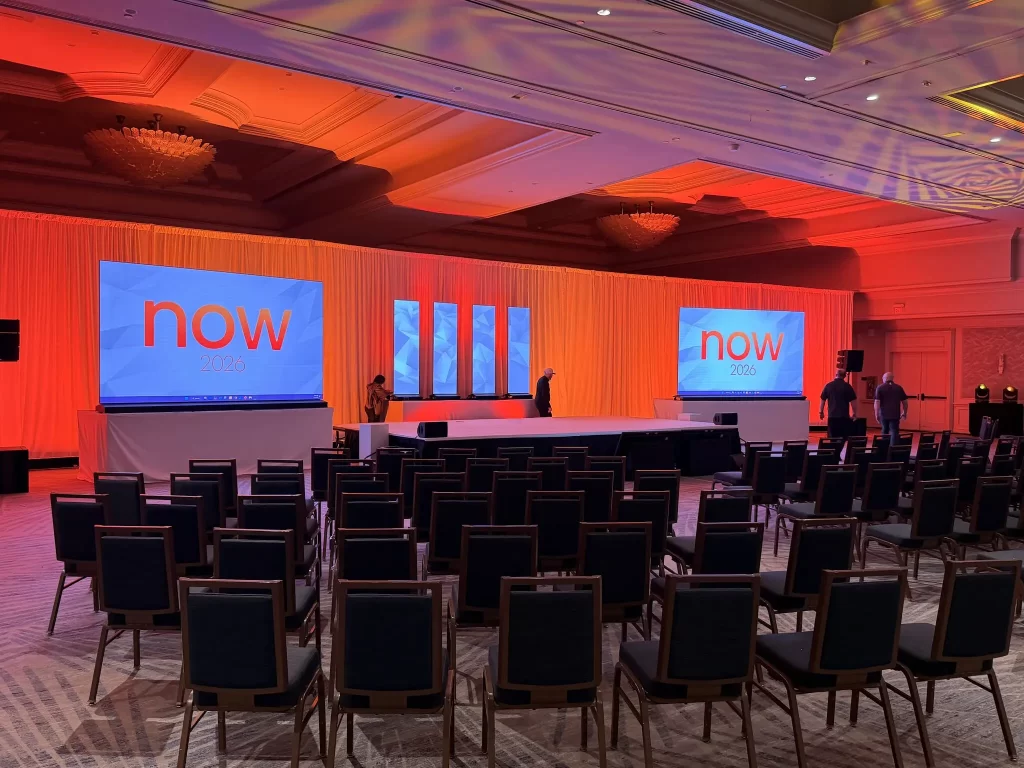
In a traditional live event set up, this may include a large screen directly behind the presenter, as well as traditional 16:9 screens on either side. Perhaps there are even LED panels throughout the room.
When the presenter is onstage, they may have a presentation displayed behind them and IMAG on either side, while LED panels through the room have branded colors or themed logos. However, during an opening video experience, a visual may fly across the screens, creating a continuous image and narrative around the room.
The same technique can be implemented in trade show booths, especially when scenic screen architecture is used. Different visuals can be displayed on the booth’s ceiling, desk, walls, and other display screens. However, at key points or when your team wants to draw extra attention, a sweeping graphic or video element can move seamlessly from one display to the next, as though they are connected, creating a unique, exciting visual experience.
Interactive Displays.
An LED floor with an instrument people can play simply by walking on it. An LED wall that shows the entire ecosystem of a brand’s products and allows people to interact with them directly. Touch screen gamification that takes an attendee’s experience from passive to interactive.
Interactive LED systems use touch screen LED panels, cameras, and sensors to create a surface that attendees are able to directly interact with. Whether it’s used for trade show flooring, a dance floor at an association meeting concert, during a product demo or workshop so that attendees can have a more hands on experience, or a thousand other ways, interactive LED, when used correctly, enhances the organization’s messaging and the attendee experience without becoming a distraction.
When used in combination with scenic architecture, everything from the walls to the floor to the furniture can be part of a unique, immersive, and incredibly memorable experience.
LED and visual technology and will continue to advance. However, the most notable ways that screens have changed over the past few years isn’t in their technology. It’s in the ways they’re used.
To learn more about how screen technology can be used to make your events shine, contact our team!