

Designing audio for an event is about more than determining the right number and type of microphones to use. It’s about making sure your entire room or event space has even sound coverage. It’s about making sure that people in all areas of the space are able to hear the presenters and video content. It’s about placing speakers in a way that doesn’t block the view of any attendees.
Great event audio may start with using high quality microphones, mixers, and speakers, but how those speakers are used – what kind you have, how many you use, and where they’re placed – is the difference between a great audio experience for some of the attendees and a great audio experience for everybody present.
Keep reading to learn more about the different types of speakers commonly used for live events and how they can be placed to optimize audio in different event spaces.
Types of Speakers
Line array speakers

Line array speakers are single systems that include several of the same size and type of speakers stacked vertically. This creates one, single audio source, but with a much more robust sound and greater volume than one of the speakers would be able to produce on its own.
Speakers stacked in this way can either have ground stacked set ups, allowing them to be supported and accessed by the tech team on the ground, or flown above attendees to reduce sight line issues and save floor space.
Line array speakers are often used for events taking place in large venues or outdoors to give consistent sound coverage across a wide area.
Column speakers
How can you get great sound without distracting from the attendees’ visual experience? With column speakers.
We love using column speakers for corporate events and association meetings because they have great sound quality and a low profile, which helps them blend into the room.
Because they are so aesthetically pleasing and easy to hide, column speakers have become increasingly popular in recent years. Organizations that have attendees seated in extreme areas of the event space, like far corners or near aisles of the room, don’t have their sight lines blocked, even without sacrificing the quality of the audio.
Point source speakers

Point source speakers are the workhorses of the live events audio world.
As the typical speakers you’d expect to see mounted on a tripod stand, point source speakers are most regularly used in smaller event spaces, like for small general sessions or breakout rooms.
While high end point source speakers can produce great audio, they are known for being boxy, making them less visually appealing, as they stand out to the attendees. For some utilizations, especially in smaller spaces where not as many speakers are needed or organizations are looking to save money, such as breakouts, the look of the speakers may not matter. However, for large general sessions or galas where organizations want to optimize the visual experience as much as possible, column speakers are the clear preference.
Point source speakers come in three sizes: 8inch, 10inch, and 12inch. The size refers to the actual speaker – not the entire system.
Subwoofers
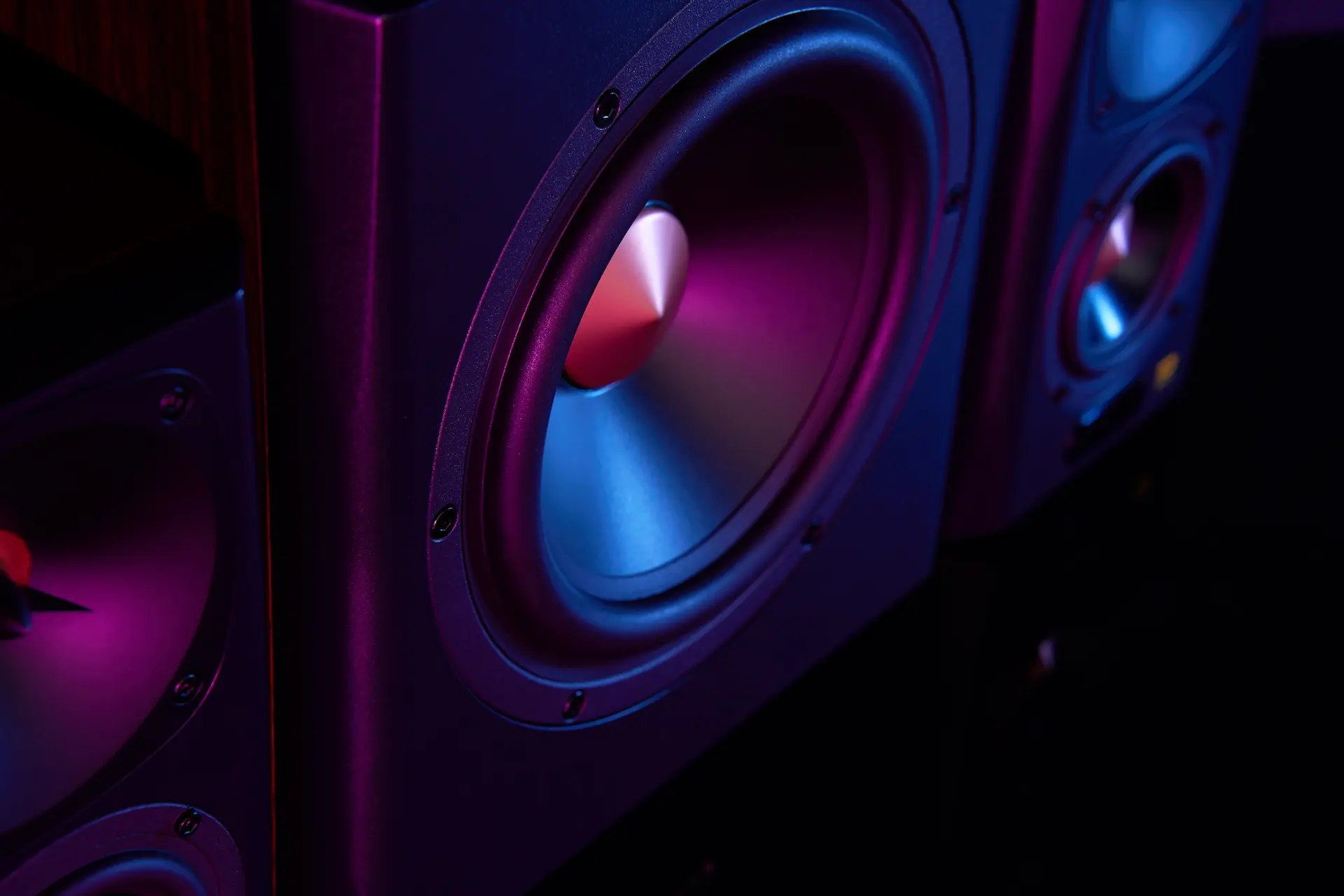
Subwoofers are used in combination with other speakers, typically for musical performances or in events where the organization wants to make a big impact with sound. This could be for a DJ performance, walk on and walk off music, or in content that features songs with strong beats and tones in the lower register.
Subwoofers handle the lower end of the decibel spectrum when it comes to audio, so if your event only features speakers and some light transitional music, they may not be necessary. However, if there are any moments, especially ones with high-impact music, that you want to emphasize, a subwoofer is a must for your event.
How to Place Speakers
Most live events have a set of primary or main speakers, usually towards the front of the room (but not right up against the stage). Whether these speakers are ground supported or flown, line arrays, columns, or point source speakers, they are the starting point for the audio design.
Once the type and location of speakers are determined, the AV team will analyze the venue, audience needs, and layout of the room to determine where additional speakers will be needed to ensure consistent sound coverage. These speakers are called “fills”.
Corner fills
In rooms that are particularly long or wide, additional speakers are often placed in corners to make sure attendees seated on the ends of each row can hear the presenters or music onstage.
These speakers are often point source speakers, as they are not necessarily in the attendees’ line of sight when they look at the stage.
Back fills
In large rooms, especially ones that have a long layout, speakers will also be positioned at the back of the room, pointing towards the audience. Like the corner fills, these speakers give those in the back of the room consistent sound coverage and keep them from struggling to hear what is taking place onstage.
Front fills
Contrary to popular belief, those in the front few rows of the audience typically do not get the best sound coverage. Why? Because the primary speakers, whether they have ground supports or are flown, are typically a few rows behind them, pointed at the rest of the audience. This puts the first few rows of attendees in an audio deadzone.
The answer to this is front fill speakers. While a ton of coverage isn’t typically needed, a few strategically placed speakers will provide audio coverage to those seated closer to the stage.
Delay speakers
In addition to the typical corner fills, back fills, and front fills, large rooms will often have additional speakers placed at fixed points to ensure each section of the audience has sound coverage.
How many places the repeaters are stationed depends on the size and orientation of the room, the number of attendees present, the layout of the space, and the strength of the speakers being used.
Using Audio Delays
Ready to get super technical? We all know that sound travels slower than light, and while we primarily think of that in terms of incredibly wide expanses (like outer space), it actually comes into play during live events, too.
Audio from the primary speakers will still reach the attendees in all areas of the room, even if it’s not at a sufficient volume. However, in addition to being quieter than we’d like, it will also reach them slower than it will reach the attendees seated closer to the stage and primary audio sources. Because of this, fill speakers, including corner fills, back fills, and repeaters, utilize audio delays.
This means that a delay is applied to the audio signal coming out of the speaker so that audio from both the primary speakers and whatever system the section of the audience is seated closest to are synced. This is incredibly important as it ensures that the audio from every source arrives at the audience’s ears at the same time, making the sound clear and removing echos.
It’s been said that event audio is an artform, and we couldn’t agree more! Even with the best microphones in the world, incorrect speaker placement, an insufficient number of speakers, the wrong type of speakers, or not utilizing delays correctly keeps the entire audience from having a consistent audio experience – and make it difficult for many people present to hear your messaging.
If you want to make sure that your speaker set up is optimized for your space, contact us today at WhatsUp@Onewayep.com