



There are a variety of different types of lights deployed in several ways to bring an event to life. From lighting that creates a cool and on-brand atmosphere to ones that give attendees a unique experience to ones that ensure the stage and room is properly lit for presenters and content, event lighting is both an art and a functional necessity for any live event.
The lighting that requires the most set up and planning because of the large number of moving pieces it has, the number of types of lights used, and how the lights are set up is, of course, stage lighting. Keep reading to learn more about how lighting set ups work for live events.
Three-Point Lighting
While a large number of lights are used to light a stage, from fresnels to lekos, parcans, uplights, and more, there are three primary light sources (each using several lights) that are responsible for providing an even stage wash, lighting presenters in a flattering way, and adding dimension to the stage so the background shines.
Key light.
The primary, brightest light source that is responsible for lighting the presenter and the stage is referred to as the “key light”. Made up of lekos, fresnels, parcans, and sometimes spotlights, the role of the key light isn’t to create an artistic or overly specific look – just to provide even lighting to the entire stage.
Fill light.
Part of creating a stage wash is ensuring that the lighting is completely even across the entire stage. While the key lights provide most of that, there are areas that will likely need to be filled in. These softer, less intense lights are positioned to fill in the areas the key lights don’t hit or have lost the full weight of their brightness in. The same types of lighting instruments are often used, possibly at a lower brightness, with a softer focus, or placed at a different angle.
These are incredibly important as they make sure there aren’t any shadows or dark areas on the stage that a presenter will need to avoid.
Backlights or uplighting.
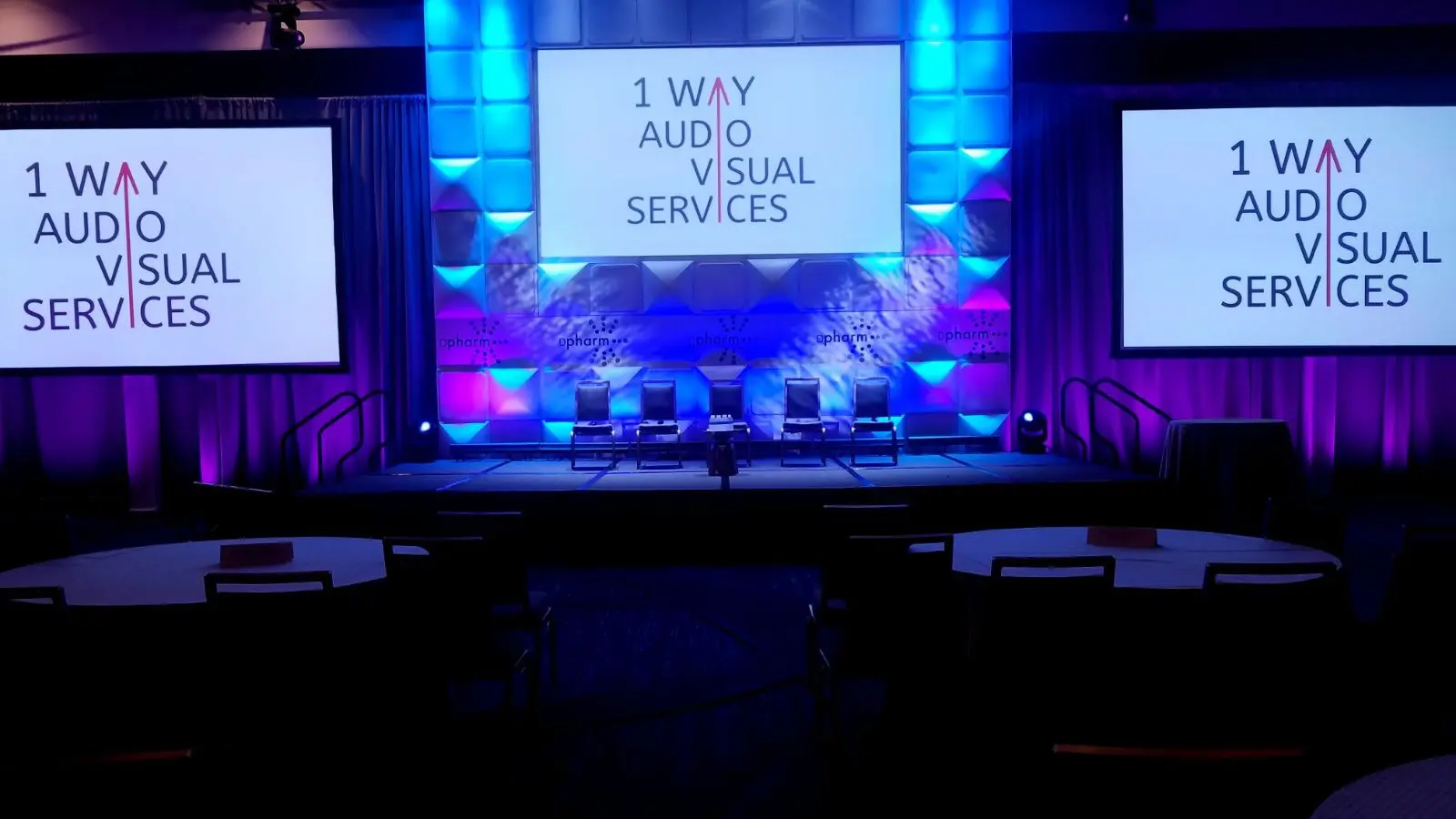

The primary purpose of uplights on a stage is to illuminate the background. Whether that be a video surface, a backdrop, or even simple drapes, lighting it has two important purposes.
First, it looks nice. Especially when simple backdrops like drapes or hard scenic is used, introducing light and color provides dimension and is more visually interesting.
Second, lighting the back of the stage creates depth that separates the presenter from the background. Instead of everything blurring together and looking like it’s on the same plain, the presenter will be clearly separated from the background visuals, placing the focus on them.
Where To Hang Lights
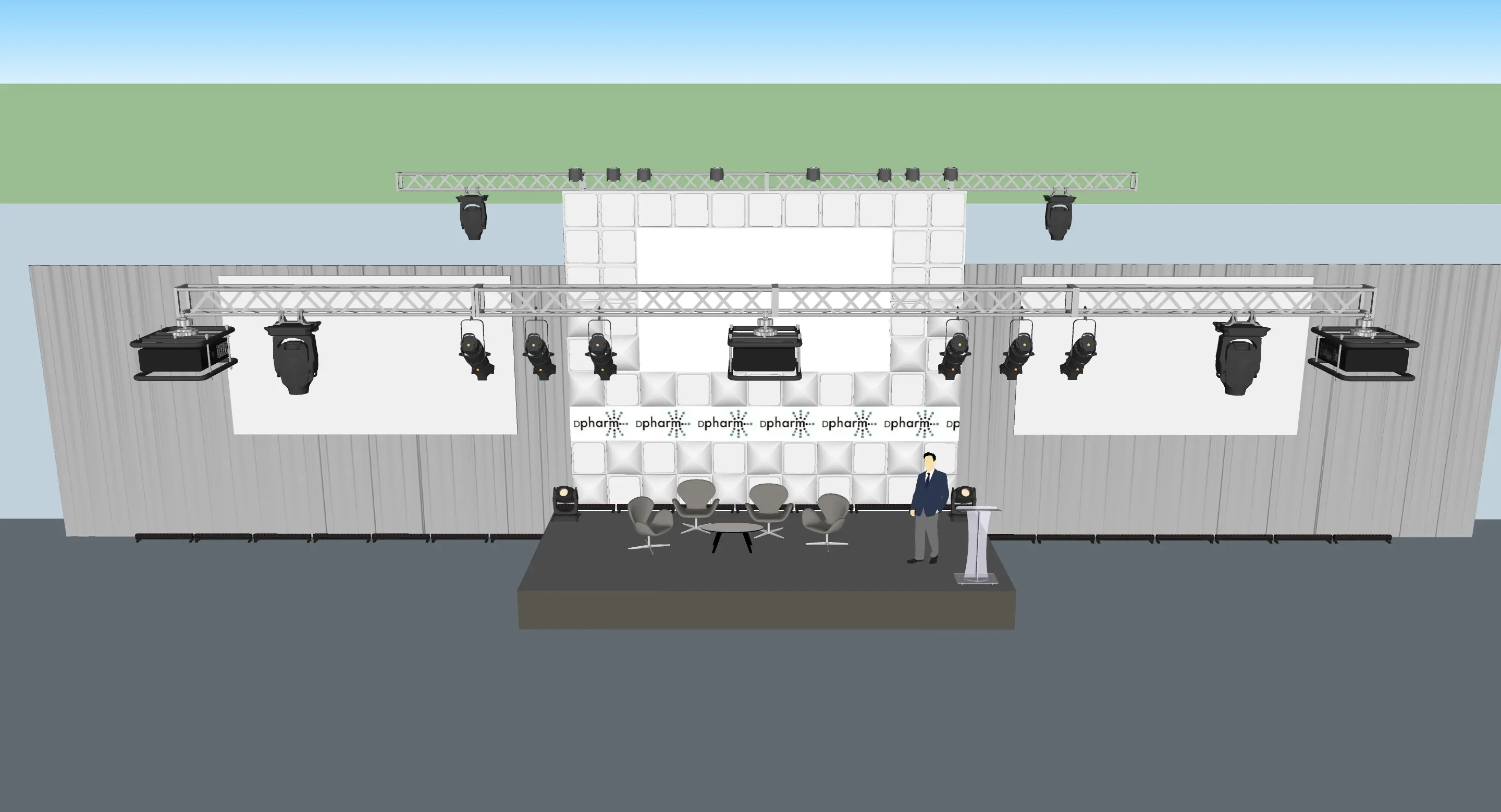

Lights are hung, or rigged, in several different places for live events. Where and how is largely dependent on the size of the event space, the rigging capabilities and safety regulations in the venue, the needs of the event, and several other factors. This is precisely why there is no one size fits all approach to lighting events – and why working with an experienced lighting designer as part of the AV team is so important.
Lighting trusses.
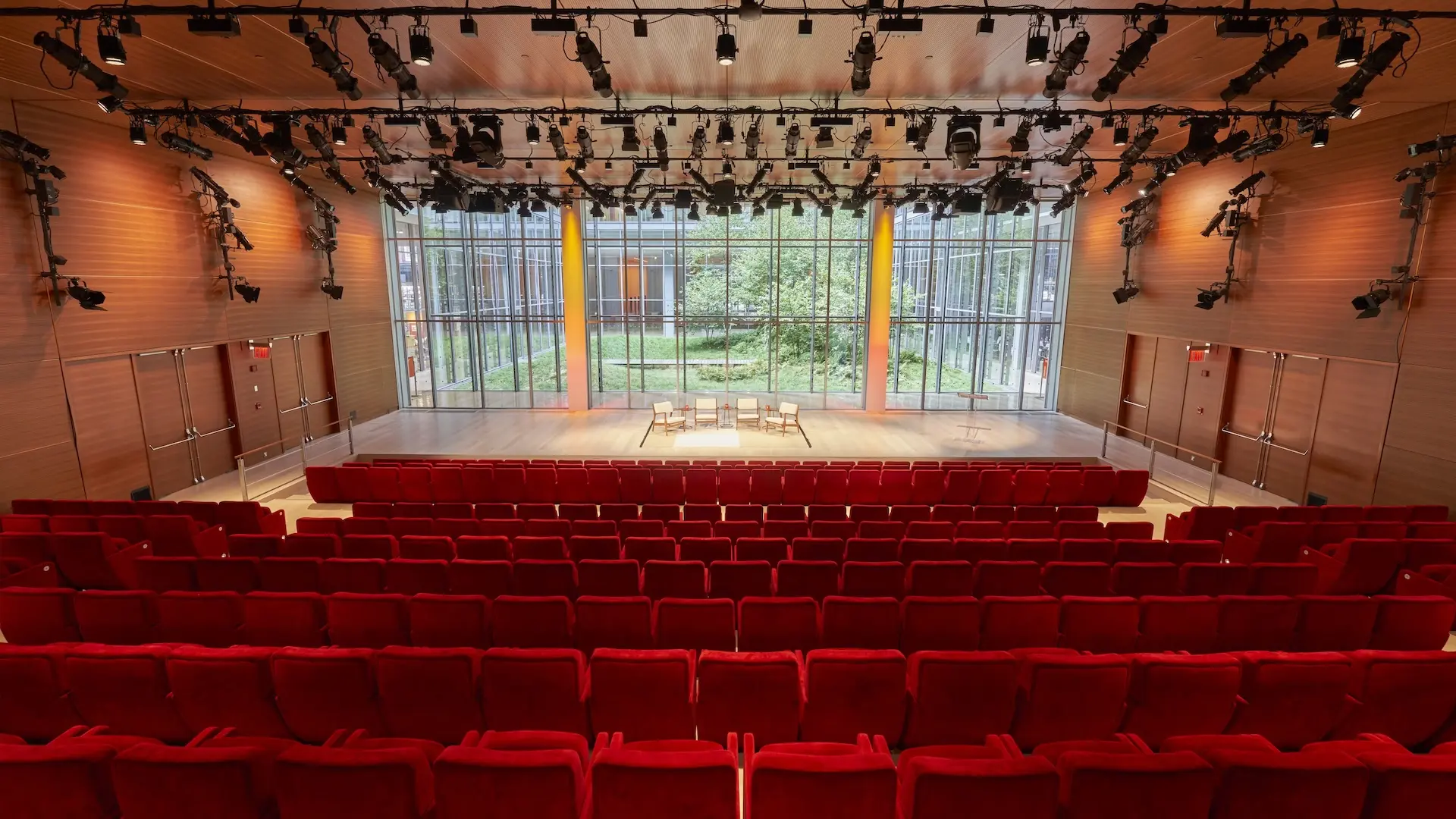

These metal frameworks are built into the ceilings of the venue and span the entire length of the stage (or room, if there is no set stage).
The intention of a truss is that it is capable of holding several lights in different sizes and weights, and it is where the majority of the key and fill lights will be stationed.
In large venues there are usually several trusses that lights can be attached to, allowing the AV team maximum control and flexibility.
Ground-supported towers / crank stands.
In some venues, especially smaller venues, the ceiling may not have built-in trusses or rigging capabilities. Sometimes the rigging that is present isn’t enough to support the weight of all the lights needed for the event.
In these situations, ground-supported towers or crank stands are often used, either instead of or in combination with trusses.
These towers are placed on the ground and then cranked up to lift the lights to the appropriate height. Think of it as a portable truss, as it fulfills much of the same function.
Lighting pipes.
When trusses aren’t present (or need to be supplemented) and ground-supported towers aren’t realistic or necessary, lighting pipes come into play.
These pipes or battens, some which come with internally-wired bars eliminating the need to run power to them, are used. It’s not the same design as hanging lights from the ceiling, but it is certainly effective for lighting a stage or supplementing overhead lighting, especially in smaller venues.
Booms / light trees.
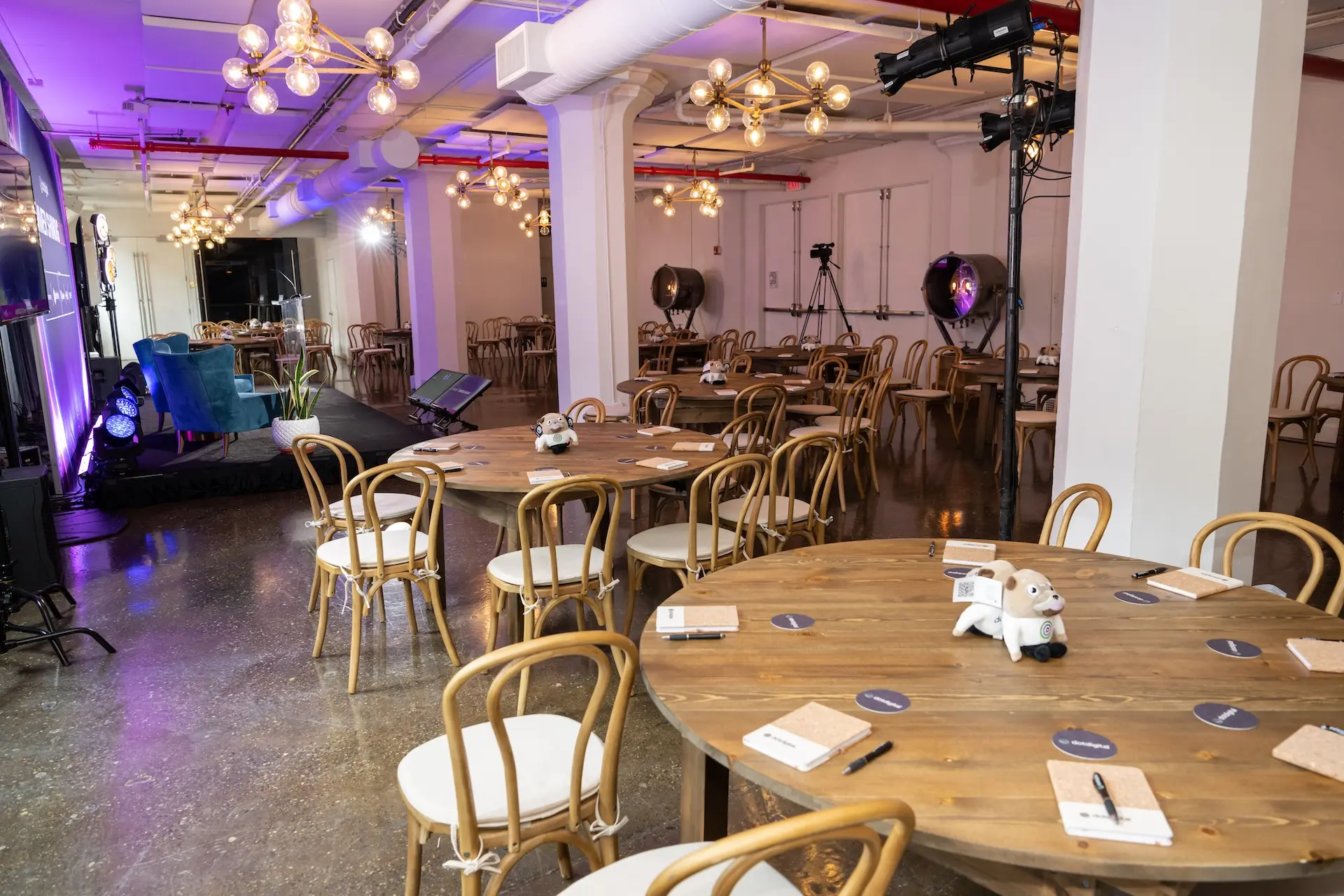

Often used for side-lighting or in smaller, non-traditional venues, these vertical pipes or stands are placed on the floor along with “tank traps”. The “tank traps” are heavy metal plates that secure the pipe or boom to the ground or stage floor, ensuring that the weight of the lighting instruments doesn’t cause it to fall over or present any other safety concerns.
Truss Lighting Positioning
There are few built in areas where trusses are typically set up for lights in larger venues.
Front-of-house.
In theaters, arenas, or other traditional event spaces, the front-of-house lights are often rigged to beams or catwalks over the audience’s heads. Oftentimes, there are several different trusses where lights can be hung, making a more even wash and spreading around the weight of the lights.
Because these venues are specifically designed to cater to live events, there is a lot of infrastructure to support it, making outside rigging devices less commonly used.
Balcony / circle bars.
Similarly, some event spaces may have balcony seating or a set second floor with seats. When this is the case, the balcony will also have lighting trusses fixed to the front of it, providing a source of light further away from the stage.
Lighting Presets
In addition to creating the plot showing where lights need to be hung to achieve an even stage wash, the lighting designer is also responsible for making sure several other lighting looks needed for the event can be accommodated by the set ups.
A few common ones are:
- A video look.
This preset is one that is used anytime videos are played onstage. Typically, the stage lights dim and artistic uplighting may intensify, making the video surfaces pop and drawing focus.
- Theatrical spotlights
If a spotlight is being used during the event, the location, as well as how it is being managed, during the event will be part of the lighting plan.
- Walk-in / walk-out
While, during the session, room lights will be lowered so the focus is on the stage, house lights will need to be on when attendees are exiting or entering the space.
- Q&A / Audience interaction
If the session features a Q&A with audience members, any microphones stationed in the audience will also need to be lit so that attendees know where the microphones are and can clearly see the people asking questions.
Do you need an experienced lighting designer and technical team for your next event Contact us today to get started!