


When getting quotes or proposals from multiple AV companies, meeting planners and organizations often wonder why there is so much discrepancy in cost or struggle to compare them directly when they’re organized in very different ways.
The fact of the matter is, not all AV quotes are built the same for a variety of reasons and in a variety of ways. From the amount and quality of equipment and labor included to the specific services you’ll receive, here are few reasons why you might see significant variation from one AV quote to another – and why you shouldn’t necessarily go with the least expensive one.
Not All Equipment is Created Equal
A good company invests in good tools.
If you’re building a house from the ground up, you’d want the architect to use high-quality materials, right? After all, a solid foundation may cost more money upfront, but in the long run, it’s more reliable, costs you less money in repairs, and certainly leads to less stress and problems once the house is complete.
The same is true for AV. We’re not just a gear rental company – we’re building a show. The gear we use, from microphones and speakers to LED walls, projectors, lighting… , are the tools that allow us to build your event. They lay the foundation for the entire audience experience.
Two microphones may have the same basic function, but they may not function in the same way or at the same level. High-quality, reliable equipment tends to cost more, but it also protects the event experience you want to create.
So when you look at the line items for two AV companies and see that one is charging half as much for the same number of microphones, it’s important to ask questions. What brand are the microphones? How long have they been in use? How are they being maintained?
You want the AV company that you work with to use tools that provide your event with a strong foundation.
Not All Technicians are the Same
Back to our house analogy: you decided to go with a housing company that uses strong materials (a good decision). Now it’s important to think about who is building the house. No matter how good your materials are, cracks will likely start to show if the people using your tools don’t know what they’re doing.
Part of this comes down to staffing. One company may take a look at the scope of an event and choose to combine positions so that two or three roles are covered by one technician. While this is common on smaller events, some AV companies will insist this is fine even on large-scale ones.
It is an easy way to save money, but it also opens your event up to the risk of big challenges. Even worse, without a dedicated technician for each role, you may not have the hands free to solve those challenges when they do arise.
For example, imagine A1 is also running the video switcher or running content (a combined role often referred to as a general AV tech). If the general AV tech has to help an upcoming presenter with their slides, they likely won’t be able to also focus on the audio or the current slide deck. Alternatively, if they have to switch gears and move from their post to manage microphones, it may delay the next table, as the tech won’t be at their table, updating slides or switching content.
That’s why many AV companies, One Way Event Productions included, prefer to have dedicated technicians for each role for one simple reason: it mitigates risk. If a challenge does occur onsite, the specialized technician is able to dedicate their energy to finding a solution without worrying about simultaneously managing other components of the event.
Many groups also have a project manager for every event who oversees the pre-production process, as well. Why? Because it’s important to have a single point person driving the ship. This person is somebody who manages the high-level vision for the event, helping technicians where necessary, leading communications with the meeting planner, venue, and client, and protecting the quality of the event.

Pre-Production Costs
You may find that some AV companies charge pre-production costs while others don’t.
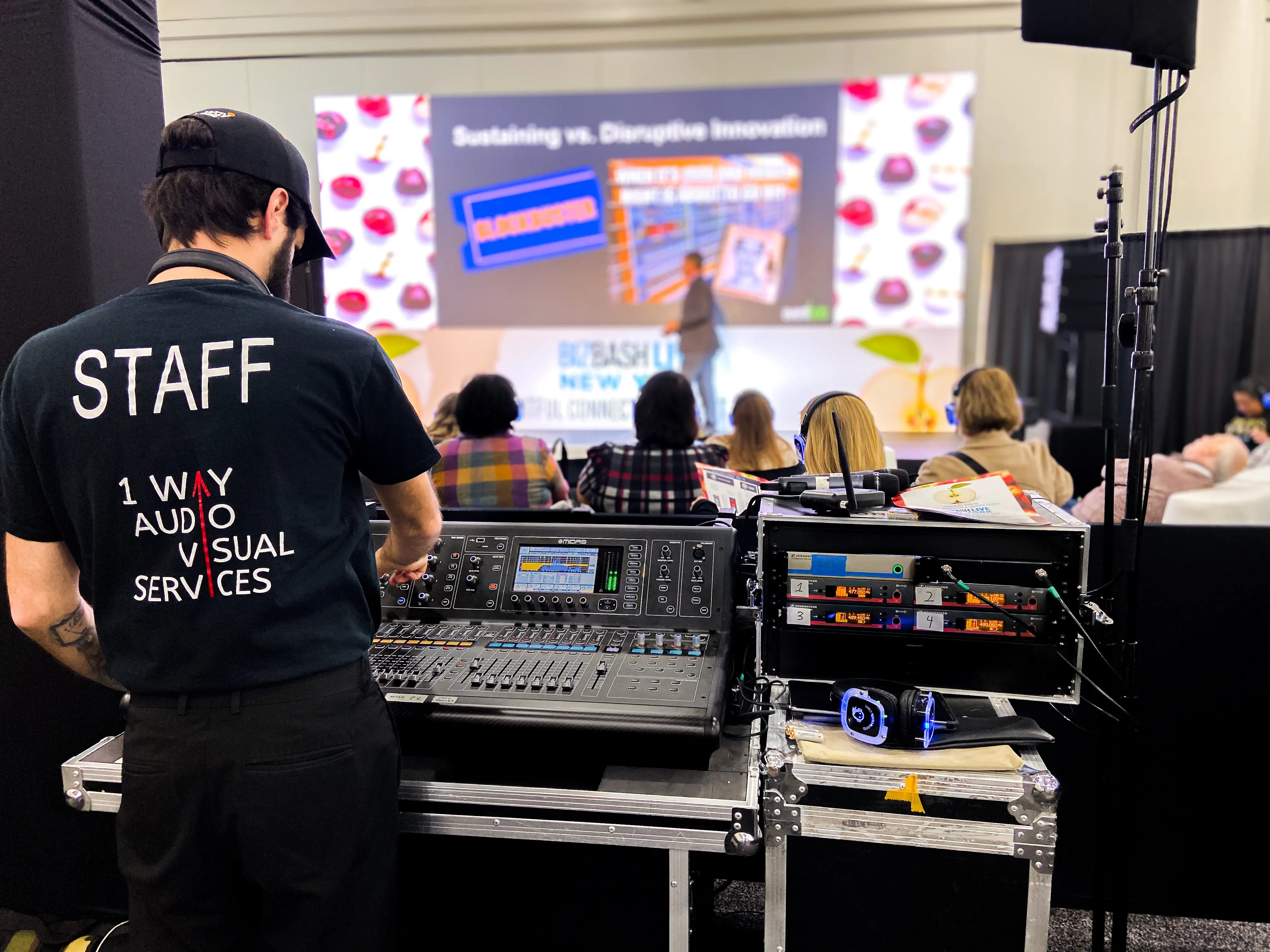
In many AV companies, there are team members dedicated to making sure the events produced by the team are coordinated properly. This means making sure that the right equipment is allocated for the event, performing quality control checks on all gear, providing schedules, coordinating with the venue, coordinating with deliveries, and more.
Companies that are charging for this likely have very thoroughly planned events and show up onsite organized and prepared. For companies that don’t charge this (without baking the cost into different line items), it may be an indication that they just don’t plan their events very well. They may get lucky and have everything go according to the loose plan they made – but they might not. If it doesn’t, you’ll feel the chaos before and during your event – and your audience may feel it, too.
Quantities of Equipment
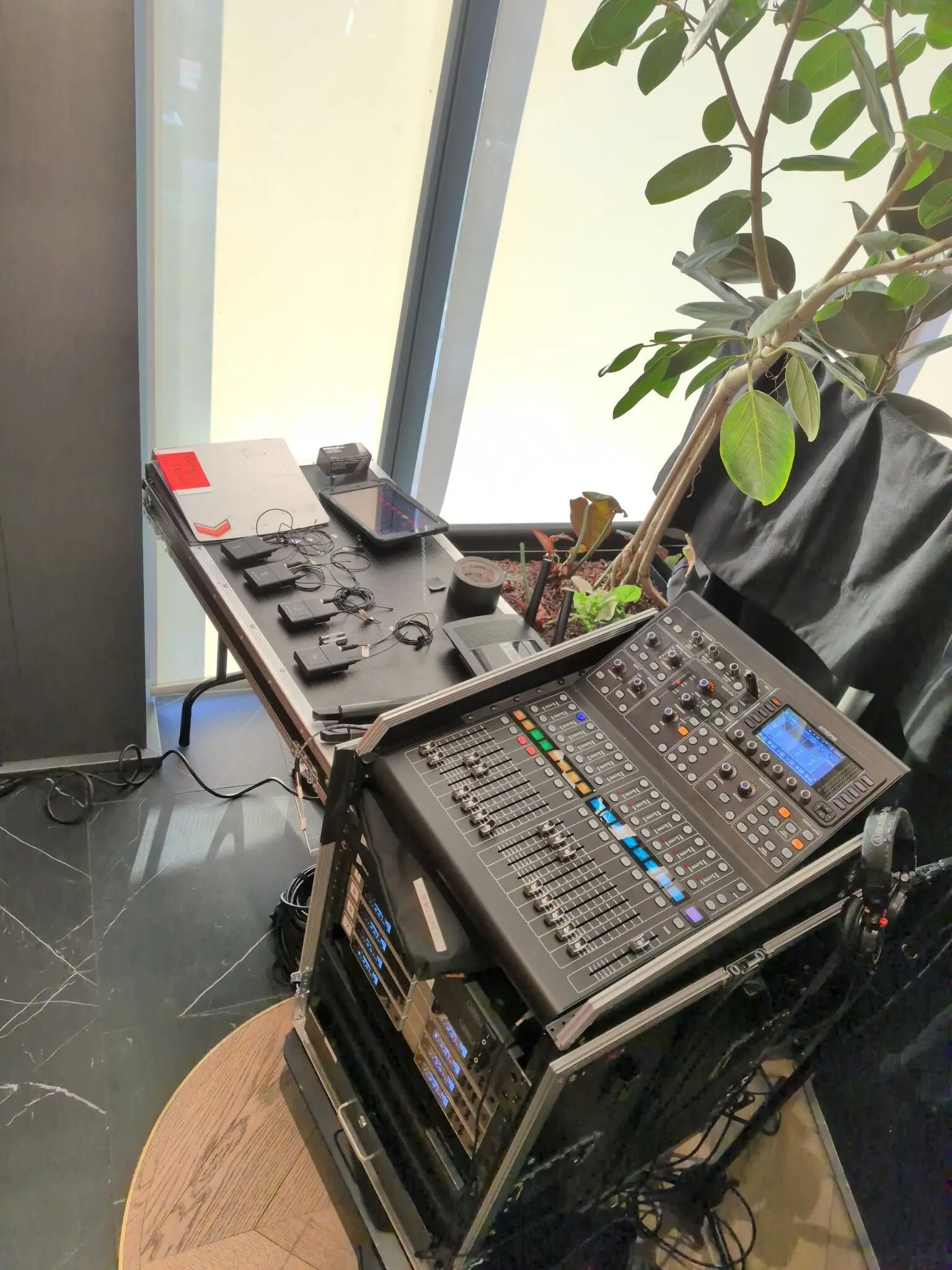

Some companies may simply approach the set up for the event differently, which means they may need different amounts of equipment.
Maybe one company has recommended two large screens, where a different one has recommended two medium screens at the front of the room and two small relay screens further back. Neither is inherently wrong. However, they are different, and those differences will result in two different equipment lists with different costs associated.
The same can be said for other components of the event. One AV company may feel that four speakers are best for consistent sound coverage, while another may think two large speakers will suffice.
In some situations, there will be recommendations for specific equipment and equipment quantities that lead to better event outcomes, but some may simply be a matter of your preferences for your event.
Miscellaneous Costs
Some costs, like delivery fees, trucking, and parking, are completely unavoidable and can’t be controlled by the AV company (unless they charge a mark-up for coordination). However, it’s very important to understand if these costs or estimated costs are included in your quote. One AV company may assume that your team will pay for those items directly or indicate that they’ll be charged separately, while another AV team will have a comprehensive quote that includes all assumed costs.