



Receiving AV quotes after issuing an RFP should be an exciting next step in planning your event. Instead, it’s often overwhelming. From the long lists of equipment (some of which you may not be familiar with) to labor positions, rigging quotes, and a whole host of other costs, a comprehensive AV quote is long, detailed, and takes a while to sift through.
We’ve put together this guide to help you better understand your AV quote, make sense of what is (and should be!) included, and approach your AV needs with confidence.
Components of an AV Quote
Regardless of who makes your AV quote and how it is organized, there are a few essential components that should be included.
They are:
- Equipment
- Labor / technical talent
- Venue related costs
- Event-specific requirements
- Miscellaneous
Depending on how your venue operates or who is responsible for providing specific services or products, what exactly falls into each category may vary. However, any event that requires AV support most likely will have line items in each of these categories.
Equipment
This is likely the longest and most detailed part of your AV quote – or at least it should be!
The “equipment” section is where the AV team shares exactly what gear they believe your event needs to both fit your vision for the event and run seamlessly. When you’re looking over the list, make sure you’re paying attention to the quantities of all gear, such as the number of microphones or specific lights and types of lighting listed. Think about any rooms or spaces outside of your primary event space, like breakout rooms, registration areas, trade show booths, networking lounges, or other spots that require AV support. Is the equipment for those rooms indicated in your quote? If not, they should be!
Your equipment quote should include at least four basic categories.
Audio
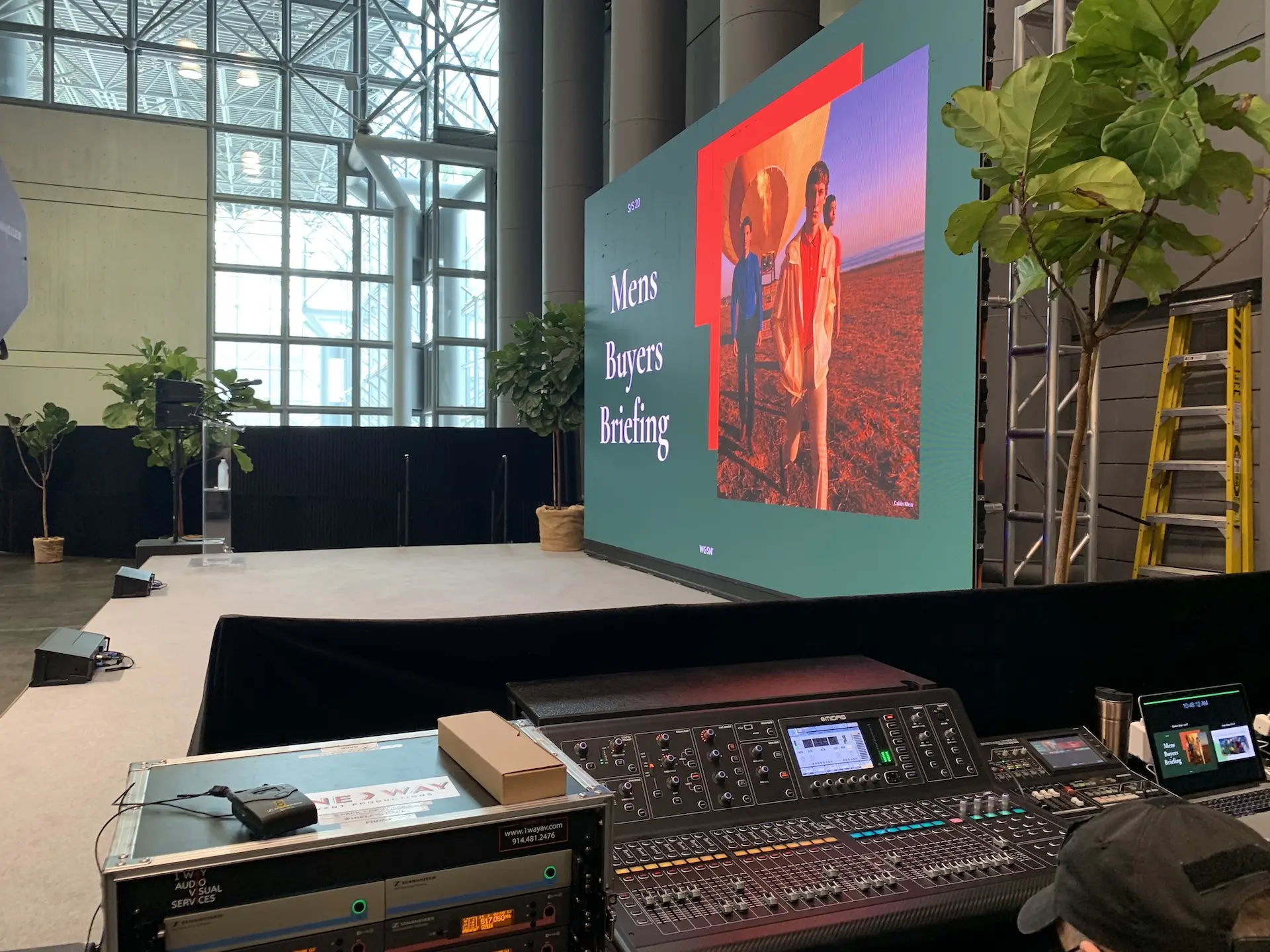
This includes microphones, speakers, mixers, amps, sound systems, and any ancillary equipment needed to make the audio run smoothly and keep all of the equipment organized within the space.
Video
When people think “video” their minds either jump to projection screens / LED surfaces OR camera equipment. This category actually covers both. In the video section, your quote will list all equipment needed for your visual displays both in the main event area and ancillary rooms. It will also cover monitors, like confidence monitors for speakers and the cameras to capture content for show-records, IMAG, and highlight footage (depending on the needs of your event).
In order to transmit content, your AV team will also need switchers, playback machines, graphics machines, and other control boards, which should also be listed in this section.
Lighting
There’s no shortage of lighting equipment used at large and small events. From stage lighting to make sure presenters are fully visible to atmospheric lighting that sets a tone and experiential lighting that is used to create a, well, dynamic experience, there are lots of lights included in most events.
Just like with audio and video gear, lighting equipment includes more than the physical lights. Dimmers, trussing, cables, lighting consoles, and power distribution are all needed.
Staging
What exactly are your presenters standing on? How do they get on and off the stage? What material is covering the stage? What blocks the backstage from the audience’s line of sight?
The staging section of your quote will include the risers, podiums, backdrops, staircases, pipes, drapes, and flooring needed to build your stage.

Labor / Technical Talent
AV companies typically don’t pack up equipment and drop it off at the venue, leaving you to make sense of it and manage it yourself (and if they do, you probably don’t want to work with them). They also supply the labor needed to set up, run, and strike all of your equipment, not to mention work with you in the pre-production phase to make sure you’re getting everything you need for the onsite experience to run smoothly.
Your quote should include:
Onsite labor
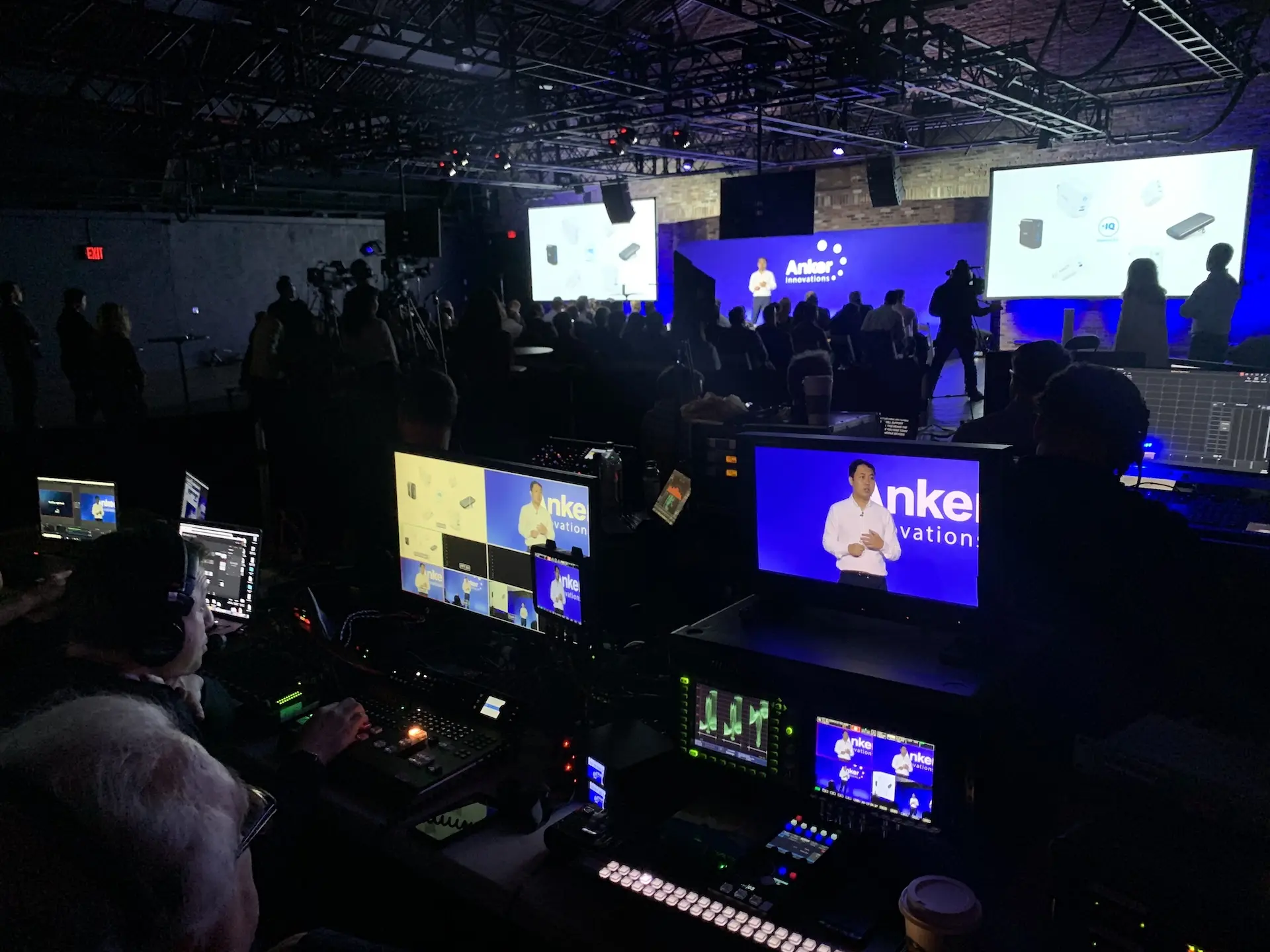
Generally speaking, every type of equipment comes with at least one technician. Audio equipment has an A1, and usually an A2 for large events, to both set up and operate the microphones and sound systems. Video equipment requires a projectionist or LED technician. Cameras require videographers at each camera, as well as a video director. A playback operator is needed to play video content that isn’t embedded into your presentation, and a graphics operator is needed to run presentations.
The list goes on and on for every type of gear. Smaller rooms, like breakouts, may not require dedicated technicians for every role, depending on their size and scope, but at the very least, a floating technician will need to be present to troubleshoot any challenges that arise and work with presenters without drawing focus from the main room.
Of course, there is also the production manager who oversees the entire operation and works closely with the whole crew, as well as any ancillary technicians needed.
Set up and strike labor
Most, if not all, of the technicians working on the event will be present during set up and strike. Why? Because they want to make sure the gear and equipment they are working with is set up and programmed in a way that is specific to their preferences.
However, depending on the event set up and amount of time available for set up and strike, additional crew members may be needed for specialty gear, rigging, or simply to help things move faster.
Venue Related Costs
Even when using an outside AV provider, rather than in-house venue support, there may be venue related costs. Below are the ones we most commonly see.
In-house technicians
There may be some positions that the venue requires in-house labor be used for, or an in-house coordinator that is required for every event.
In-house fees for miscellaneous items
If your event requires a strong internet connection, such as a hardline with enough power to support a large live stream of the event, the venue may charge to upgrade your internet package.
Similarly, they may charge for power, based on the amount of power you’re expected to use with the proposed set-up and gear.
Rigging
Many venues also require that in-house services (or specific partners) be used for all rigging. This is a BIG one that, depending on the amount of rigging you need, could have a hefty price tag attached to it.
Depending on your contract with the venue, these costs may be billed directly to your organization, rather than included as part of the AV quote. However, your AV team should be aware of what costs fall into their budget and indicate these line items, even if the cost shows that it is being billed directly to your organization. This keeps you from assuming that the AV quote is all inclusive if it isn’t.
Miscellaneous
Many miscellaneous items may be indicated in other parts of your quote, but if they aren’t, it’s important to make sure they’re accounted for somewhere.
Some common ones are:
- Cables for equipment
- Travel & lodging, including parking, for any onsite crew members
- Shipping costs
- Delivery fees
- Dock or freight fees the venue charges to the AV team
- Per diem for onsite crew members
- Extra power, should an additional power supply and distribution method need to be used
- Rigging, if it’s not provided by the venue
Another item that should be included somewhere in your quote is pre-production.
Pre-production is an integral part of a smooth onsite experience. It ensures that the event is staffed properly, the right gear is pulled, schedules are made correctly and clearly communicated, and allows the AV team to make sure that any potential challenges are flagged and handled before arriving onsite. The onsite production manager often is in charge of pre-production as well, but their time, as well as the time of others on the team, needs to be accounted for.
Analyzing your AV Quote
The first step in analyzing your AV quote is making sure it seems thorough. Double check that the equipment list looks complete, gear and labor is allocated for every event space where they are needed, the timeline indicated in the quote is accurate, and the proposed schedule aligns with your access to the venue and space.
Next, if you’ve received multiple quotes, cross reference them. This is especially important if one seems especially low or high compared to the others. Try to understand where those differences are. A few common reasons may be:
- Quality of equipment. One AV team may be using equipment that is much older or lower quality, which would result in a lower quote.
- Quantity of equipment. If every AV company recommends the same number of microphones, but one quote indicates significantly more or less, that will have a big impact on your quote (and your onsite experience)
- Quality of labor. Some AV companies may feel that your event requires highly-experienced talent, while others may believe some of the positions could be filled by less experienced technicians. One isn’t necessarily right (depending on the needs of your event and venue, of course), but it can make a big difference in both the amount you pay and the services you receive.
- Amount of labor. Does each role have a dedicated technician, or are some roles combined into a general AV tech? A smaller crew results in a smaller quote, but it also means less dedicated attention onsite.
- Different technical set ups and recommendations. This one especially comes into play if your proposal was open ended or if you didn’t have an exact set up in mind. One AV team may recommend a large LED wall for your primary visual display in your main event space, where another may recommend two smaller projection screens and delay screens halfway through the room. Which one you like better comes down to personal preference and what makes more sense for your event, but different costs will be associated with each one.
Don’t Be Afraid to Ask Questions
A good AV partner will be more than willing to talk you through the quote, explain the line items, and share why they’ve come up with the event strategy and plan that they have. And if they aren’t willing to, it’s probably a pretty good indication of what it will be like to work with them.
In addition to asking about their strategy, it’s always a good idea to be candid with the AV team about any budget limitations you may have. It may be that, as they learn more about your event and budget needs, they can make adjustments to their recommendations and plan to fit within your budget – as long as they believe it won’t affect the quality of the event.
Making sense of AV quotes is complicated for a variety of reasons. From the different ways AV quotes are organized to varying recommendations for your event, not to mention the sheer number of line items in a comprehensive quote, it’s not always as straightforward as it seems.
Our team is here to help! Reach out today to get an AV proposal or ask questions about our recommendations.