

Audio technicians, video techs, production managers, and technical directors, oh my!
There’s no shortage of people working on live events. There’s the team from the host organization, the event planner, the venue contacts, caterers, floral designers, linen vendors… the list goes on and on.
And, of course, every event with any technical elements needs a production and AV team.
Because the production and AV team is in charge of so many moving pieces during the event, they come with a crew full of technicians, leaders, and creatives, all responsible for bringing a different component of the event to life.
If you want to know who’s who on the production and AV team and how each piece position fits into the puzzle, keep reading.
The Top of the Org Chart.
The contact from the organization hosting the event and the event planner are at the very top of the org chart for one simple reason: they’re the people responsible for making decisions and giving final approval on all things AV leading up to and during the event.
They work closely with their contact from the AV leadership team, who acts as a liaison between the organization or event planner and the rest of the AV and production team.
AV Leadership.
Production Manager.
The production manager, who may also be referred to as the producer or executive producer, is the primary AV point of contact for the host organization or event planner.
They manage just about everything: the budget, the schedule, operations, contracting, and communications with both the customer and the venue. They make sure that the production plan aligns with the customer’s vision, facilitate conversations, make sure decisions are made in a timely manner, and make sure the production timeline is moving ahead on schedule without any hiccups.
In many ways, the production manager acts as a go-between for the customer and the rest of the production team, which helps to streamline communication and keep everyone on the same page.
During the event, the production manager continues to act as a liaison, giving both the customer and the crew one person to turn to with any questions or concerns that arise.
Technical Director.
The Technical Director, or TD, oversees the technical execution of the entire event. This includes audio, video, lighting, and staging.
The majority of their job takes place onsite, but they often work with the production manager leading up to the event to verify any technical needs, make sure the proposed technical plans will work within the event space and the timeline given, and assist with any pre-production, as needed.
Onsite, the TD works closely with the production manager, often filtering any questions from the rest of the AV team.
AV Department Leads.
While everybody on the AV team falls under the purview of the production manager and the TD, the leads for each individual department will communicate with them most closely.
The Showcaller.
The showcaller is the ringleader, if the ringleader never went onstage.
The showcaller is given a detailed showflow that shares what is happening onstage at any given point in time. They sit at the front of house table and communicate with the entire crew through their headsets, making sure that everybody has their marching orders and counting down cues in real time.
For a presenter’s entrance, this includes what is taking place on screen, what VOG and / or music needs to play, what lighting preset is being used, and which microphone will need to go live once they’re ready to start speaking. In the same vein, they transition in and out of videos, call any specialty items like pyrotechnics, and problem solve in real time.
The showcaller may be a stand alone position, but often the production manager or producer will also be in charge of calling the show.
Audio, led by the A1.
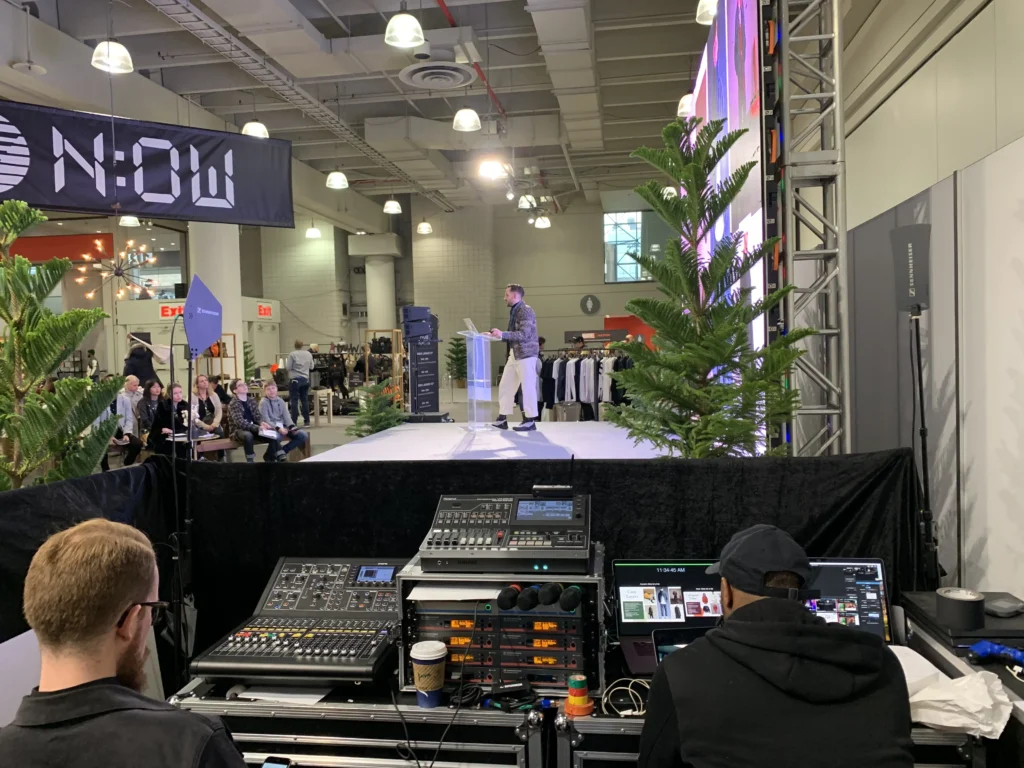
The A1 is in charge of all things audio for the event.
This means setting up the audio systems, including speakers placed around the room, the audio console, and the microphones. They make sure that all audio cues, including music, VOGs, and playback are programmed correctly and that microphones are synced to their respective channels.
During the event, they typically sit at the front of house table, running the audio board. They communicate closely with the A2, who is stationed backstage, to confirm which microphone each presenter is using.
Video, led by the Video Director
Just as the audio director is in charge of all things related to sound, the video director is in charge of everything related to onscreen visuals and camera records during the event.
They manage the playback operators and camera operators to make sure that the right content is being captured during the event and the right videos are cued prior to going live.
The video director is also in charge of the video switcher, which allows them to determine what is being shown onscreen at any point in time during the event. This means switching between playback and graphics feeds, choosing what IMAG shots are being featured, and making sure that all transitions are seamless.
Lighting, led by the Lighting Director
The lighting director is in charge of programming and executing the lighting design.
Because of the sheer number of lights used in a live event, the lighting director typically has a crew working with them to hang lights, adjust focus or add gobos, and assist with programming. However, the lighting director is in charge of operating the lighting console during the event. The console controls every lighting cue, with the exception of a manual spotlight, if one is being used.
Stage management, led by the Stage Manager
This title is self-explanatory. The stage manager, well, manages the backstage experience for the client, onstage talent, and presenters. This puts them in charge of making sure everything flows.
They tell people when to enter the stage, help to manage the show flow, coordinate the addition or removal of furniture if needed, and help to manage communications between the front of house table, the backstage technicians, and the customer, as needed.
AV Technicians.
The A2.
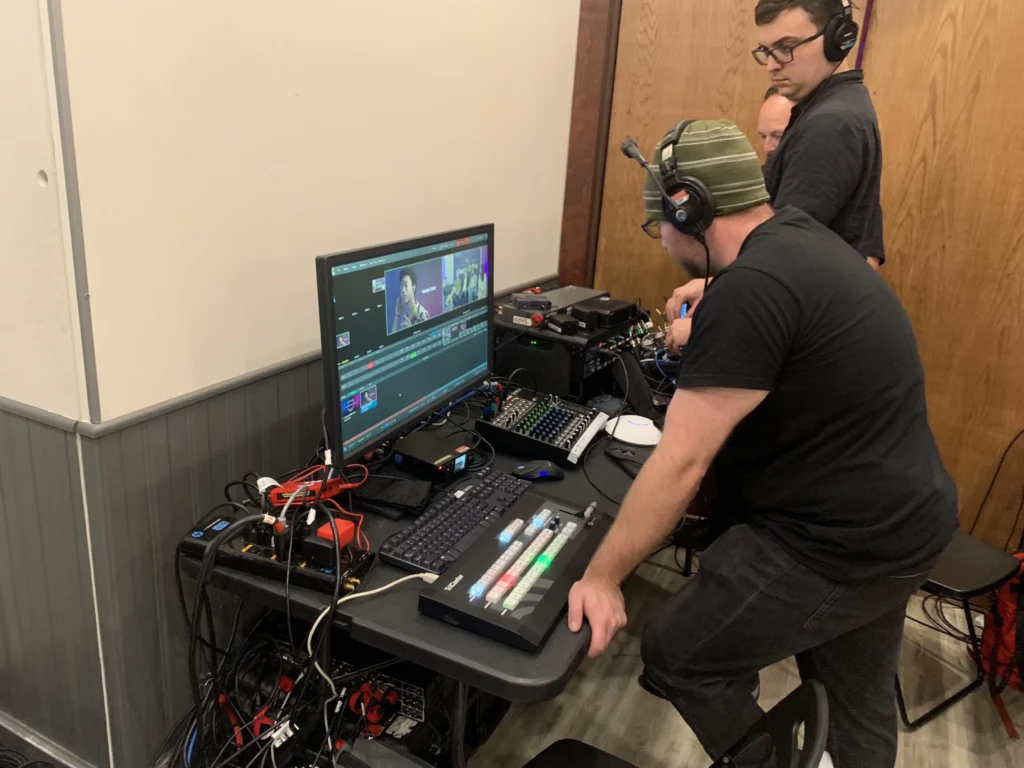
The primary responsibility of the A2 is mic’ing speakers backstage. This includes making sure that all wireless microphones have fresh batteries and are locked on prior to mic’ing each speaker.
Microphones for certain speakers, especially keynotes or leadership members giving long presentations, will likely be specified in the show flow, but the A2 will still confirm which microphone each speaker has via their headsets.
Camera Operators.
This one’s pretty self explanatory. The camera operators operate various cameras for different functions throughout the course of the event. This can include broadcast cameras, DLSRs, and robotic cameras that are mounted on walls or truss and operated remotely.
How many operators there are depends on the number of cameras, the types of cameras, and what the shots are being used for.
Projection or LED Operators.
The projection or LED operators manage the displays. Oftentimes, this role is specific to the pre-production phase, but the technicians may check in prior to the event’s start or be on call to handle challenges, as needed.
Lighting Technicians.
The duties of the lighting technicians also largely take place during pre-production. A single live event can have hundreds of individual lights, all of which need to be hung and focused according to the lighting design plot.
Graphics Operator.
The graphics operator runs the graphics machine. This includes advancing slides and notes decks on down-stage monitors, managing any builds in the presentation, and making sure the right visuals are shown on screen at the right time.
Playback Operator.
The playback operator runs the video playback machines. They work closely with the video switcher to make sure videos are cued up and begin at the right time. On smaller events, the playback operator may also operate the video switcher.
Do you want to learn more about what technical positions will ensure your event runs smoothly? Reach out to our team today to learn more!