

You have an event coming up in a few months. Maybe you have nearly all the details mapped out and you just need somebody to bring it to life. Or perhaps you’re at the beginning stages and you’re looking for somebody to help you take your goals and craft an experience that will help you achieve them.
Either way, you need equipment and a staff to run it. You need an AV team.
But choosing the right AV team to support your event takes a lot more than price shopping or picking the first team that pops up on Google. Why? Because the AV team controls the outcome of your event. In the right hands, your event goes smoothly, you stay stress free, and your attendees have a great experience. In the wrong hands, your day is filled with technical hiccups, the backstage experience is tense, and you can’t wait for the day (or days) to end.
Well, we’re here to help. We’ve put together a guide for what you should look for in an AV team, as well as what questions you should ask during the RFP process. Keep reading to learn more!
Experience.
When choosing an AV team or a production partner to work with, you want a team with a proven record of successful event outcomes. That means several years in business, a good reputation with venues and other vendors, a trusted network of in-house and freelance talent, a portfolio full of work, and a list of happy customers they’re willing to provide as references.
This seems pretty obvious, right? But there’s one thing that doesn’t account for: is their experience relevant to your event?
The term “live event” is a huge catch all phrase that can mean a variety of things. Multi-day conferences. Large trade shows. Galas in bespoke venues. Concerts. Press conferences. Virtual events. Association meetings. Corporate sales meetings.
And then come all the types of venues the event could be held at. Large convention centers, white box venues, third spaces, hotel ballrooms, converted spaces, historic venues, amenities spaces… the list goes on and on (and on).
An AV team may be incredibly experienced in producing association meetings in hotel ballrooms, but if you’re looking for support for a gala in a converted historic building or are running a trade show booth at the Javits, they may not have the right experience to lead the process. That isn’t to say their skills couldn’t translate over. In fact, they probably would! But there will be a learning curve and they may not understand the intricacies of working in a different discipline or location than they have in the past.
What to ask.
- Tell me about 2-3 similar events you’ve worked on and the approach you took.
- Tell me about a time you worked in this venue or a similar venue. How was that different from working in other spaces?
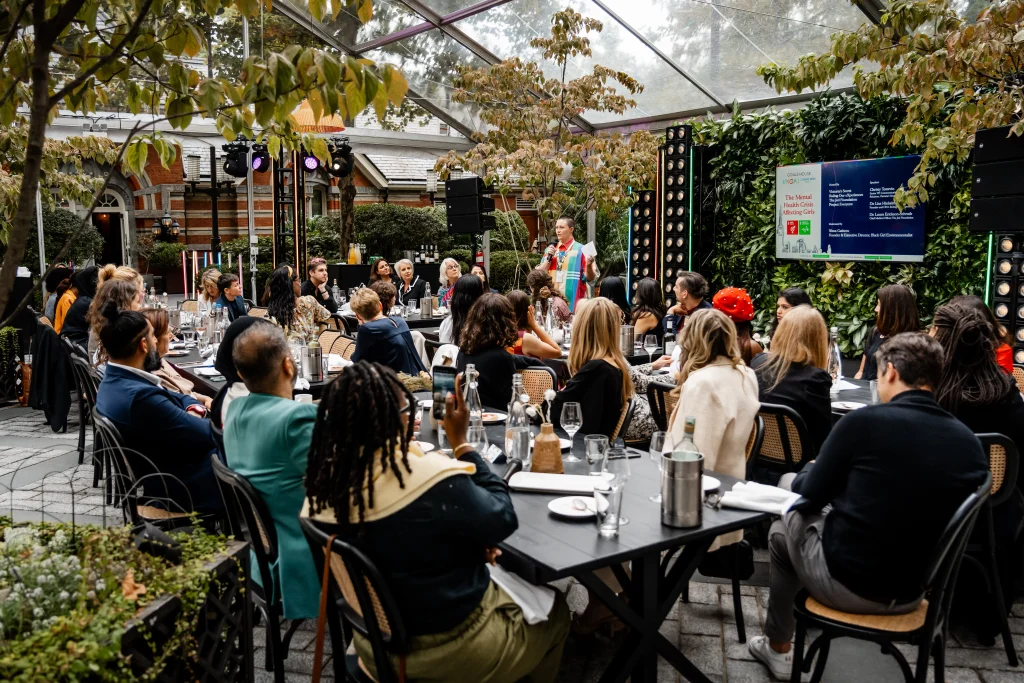
Gear.
Gear isn’t the only thing a good AV team supplies, but it’s a very, very big piece of the equation.
We won’t get into the specific makes or models you should look for in every type of AV equipment, largely because there are a lot of trusted brands for almost everything on your list. What is important is that they’re using a recognizable brand, current models, and that the gear list they provide makes sense for your event.
Even more important? How they maintain their gear. Even the newest, fanciest, most expensive sound system won’t serve your event well if they don’t store it safely, don’t perform quality control checks, and do nothing to ensure it stays in top condition between events.
Some venues provide or require that you use certain in-house gear, so it’s also important that your AV team is able to work with the venue to coordinate what gear is already onsite and make sure it is compatible with anything they bring.
Finally, any good AV vendor plans for redundancy, so if that’s missing from a gear list, it’s a red flag.
Quality AV teams know that technology isn’t always 100% predictable and unforeseen challenges can and will happen (often at the worst times). Even when the gear is perfectly maintained. Even when quality control checks are extensive. Even when the team does everything right.
That’s why a professional, reputable team has redundancies. They bring extra microphones, they have secondary playback and graphics laptops booted and ready to take over the show at a moment’s notice, they bring extra cabling, they have spare batteries, and generally bring much, much more gear than they intend to or will use, all to make sure that if a failure does occur, it doesn’t disrupt your program.
What to ask.
- What equipment will you use for my event?
- What is your quality control process?
- What do you do in case of an equipment failure during an event?
Staffing.
Remember when we said an AV team provides more than gear? That’s because they also provide the staffing and crew that will manage both your event and the pre-production process.
This doesn’t necessarily mean that your AV provider needs to have an enormous team. In fact, it’s incredibly rare for an AV company to staff an entire show with only in-house talent from start to finish. A lot of the people onsite at your event are going to be freelancers.
The live event industry is one that relies heavily on freelance and contract labor, for a variety of reasons, so if an AV team says they’ll be bringing in outside support, that’s not a bad thing. It’s expected! Many of the most specialized technicians are freelancers.
You want the team you work with to have a combination of dedicated, talented in-house team members who will guide your event through the pre-production process and be present and available during your event, as well as a deep bench of freelance talent, ensuring that the technicians operating your event are talent, experienced, and focused.
What to ask.
- What positions do you typically use in-house talent for? Which do you use freelancers for?
- What do you do if your preferred freelancer isn’t available for the event (note: they should have multiple preferred freelancers for any given role!)
- When will you be able to confirm the crew list for the event?
A Detailed Process.
It’s great when your AV team is able to adapt their process and be flexible with their timelines to fit your needs – but it’s important that they have a process to begin with.
Regardless of its scope or size, every live event is filled with an incredible number of moving pieces. Schedules, set design, gear lists (with redundancies), staffing schedules, room diagrams, creative details. It’s all too easy for one little detail to be missed – and even that can cause significant challenges onsite.
It’s not your job to guide the AV team through the pre-production process or onsite during the event. They’re responsible for making sure every box gets checked and every detail is in place. They are the experts – so you should be able to count on them to guide you.
This means that they share their process with you, including expectations and deadlines for your team, proactively communicate any concerns or ideas, and have a method for dealing with any and all aspects of the planning process.
For our team, the process revolves around our showbook. Our comprehensive showbook is a virtual and physical document that contains any information that anybody involved in the show could possibly need to have. This includes technical information logistics, crew information, delivery arrangements, contact information, and more. Our process is to build each piece of the showbook on a specified timeline so that each step is completed on schedule and nothing gets missed.
What to ask.
- What is your pre-production process and what is the proposed timeline?
- How do you mitigate any delays?
- What is my role in keeping everything on track?
Approach.
An AV team provides the gear and staffing. A good AV team does it with a smile. A great AV team thinks of themselves as an extension of your team. They’re not a vendor, they’re a partner. They aren’t just providing gear and labor. They’re helping you approach the event strategically, providing creative solutions, removing risk, and giving advice based on their experience and understanding of your goals.
What to ask.
- How do you work with your clients?
- How do you view your role in my event?
Good Communicators.
If you’re struggling to get timely responses or answers to questions from an AV team before you’ve signed a contract with them, think of how much worse it will be once they’ve already won your business.
Everybody tends to put their best foot forward during the RFP process, so if you’re already noticing that communication is lacking, it’s not a great sign for the future.
Here’s what you should be looking for:
Explains the process thoroughly.
- Promptly answered emails, even if they’re confirming they received your question and are working on finding the answer
- Budget transparency and willingness to answer questions
- Asks for and is willing to listen to feedback
- Takes time to make you feel comfortable
What to ask.
- How quickly can I expect responses from you?
- What’s the best way to get in touch with you for anything urgent?
- How regularly will we meet leading up to the event? (the right answer for this will depend on the scope of your event and the AV needs as well as how quickly the event is approaching.)
Disposition.
Live events can be stressful, and it’s natural to feed on the energy of those around you.
You want an AV team that is calm under pressure. If issues do arise, the AV team should be more focused on finding solutions than laying blame. You want them to welcome collaboration and be as excited about your event as you are.
Put simply? Your team should be happy to answer your questions, walk you through the process, and make sure the event is the one you’ve been envisioning.
What to ask.
- How do you approach challenges onsite?
- Tell me about a time when something went wrong during an event. How did you handle it?
Finding the right AV partner for your events isn’t always straightforward. In fact, it can be really daunting. So next time you’re getting ready to issue an RFP, include some of the questions above and think about what answers you’d like to see.